
Most Amazon affiliates discover broken links the hard way: a revenue dip, a reader complaint, or a manual spot-check that turns into an afternoon of copy-paste work. By then, you have already sent traffic to dead destinations, out-of-stock products, or URLs that never tagged to your account in the first place.
The Amazon Link Checker is Amazon’s built-in tool for verifying tagged URLs. It tells you whether a specific link is coded correctly so you get credit for referrals. For operators running content at scale, though, one-off checks are only part of the picture. You also need a process for finding issues across hundreds of posts before they cost you commissions.
This guide covers what the Link Checker does, how to use it, how Amazon affiliate URLs are structured, and when automated monitoring makes more sense than manual paste-and-check workflows.
Updated 2026.
1What Is the Amazon Affiliate Link Checker?
The Amazon Link Checker tool verifies tagged URLs linking to Amazon.com. It is one way Amazon affiliates can confirm they are set up to earn commissions from their links. Amazon uses a Tracking ID or Associate ID to monitor every referral sent to Amazon.com.
It is the only way Amazon can know who is sending them traffic and who should get credited for sales.
Your Associates or Tracking ID is how you get paid for your referrals. If that tag is missing, malformed, or pointing to the wrong store ID, you do the work and Amazon keeps the attribution.
For operators, the implication is clear: link validation is not a nice-to-have. It is part of the infrastructure layer that sits between your content and your payout.
How It Works
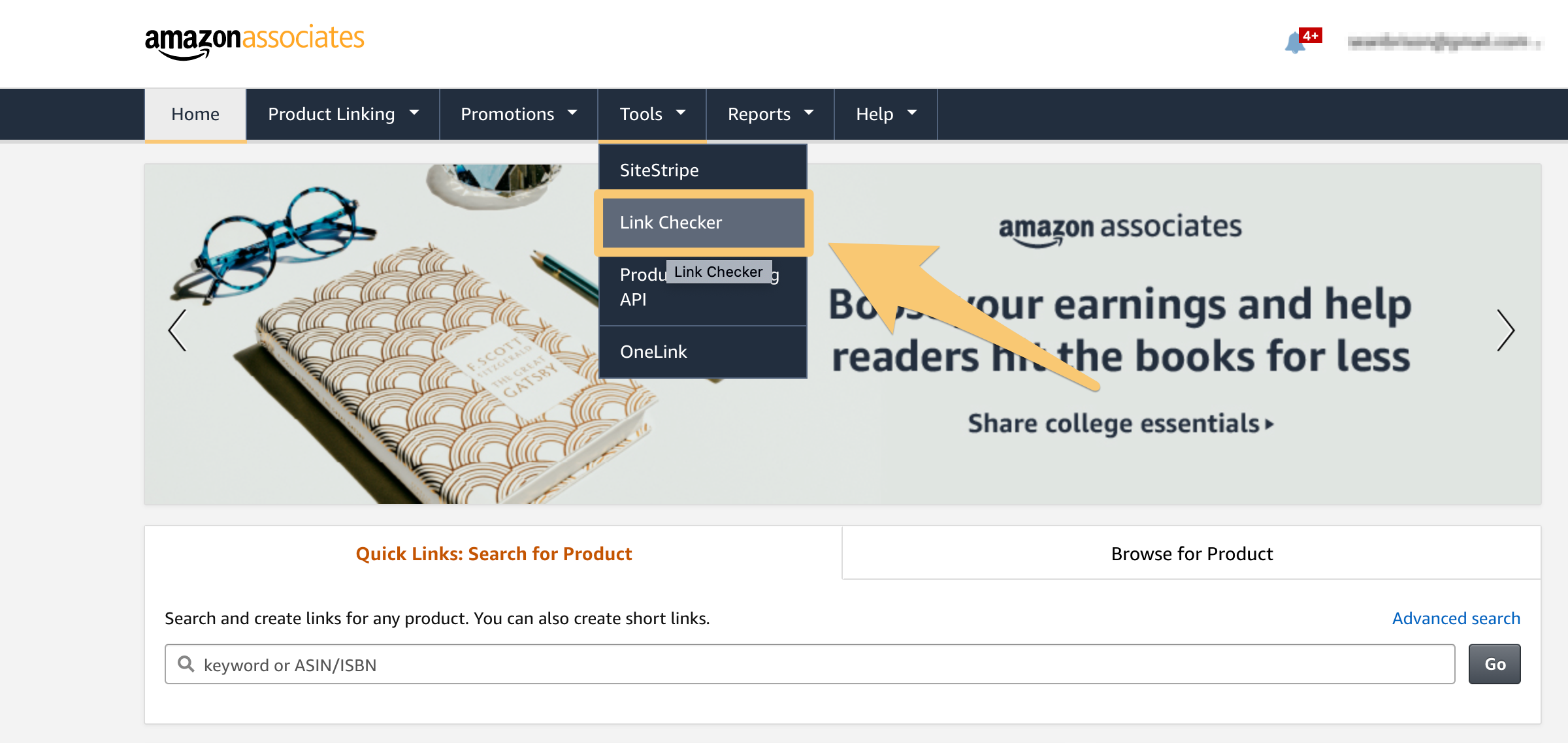
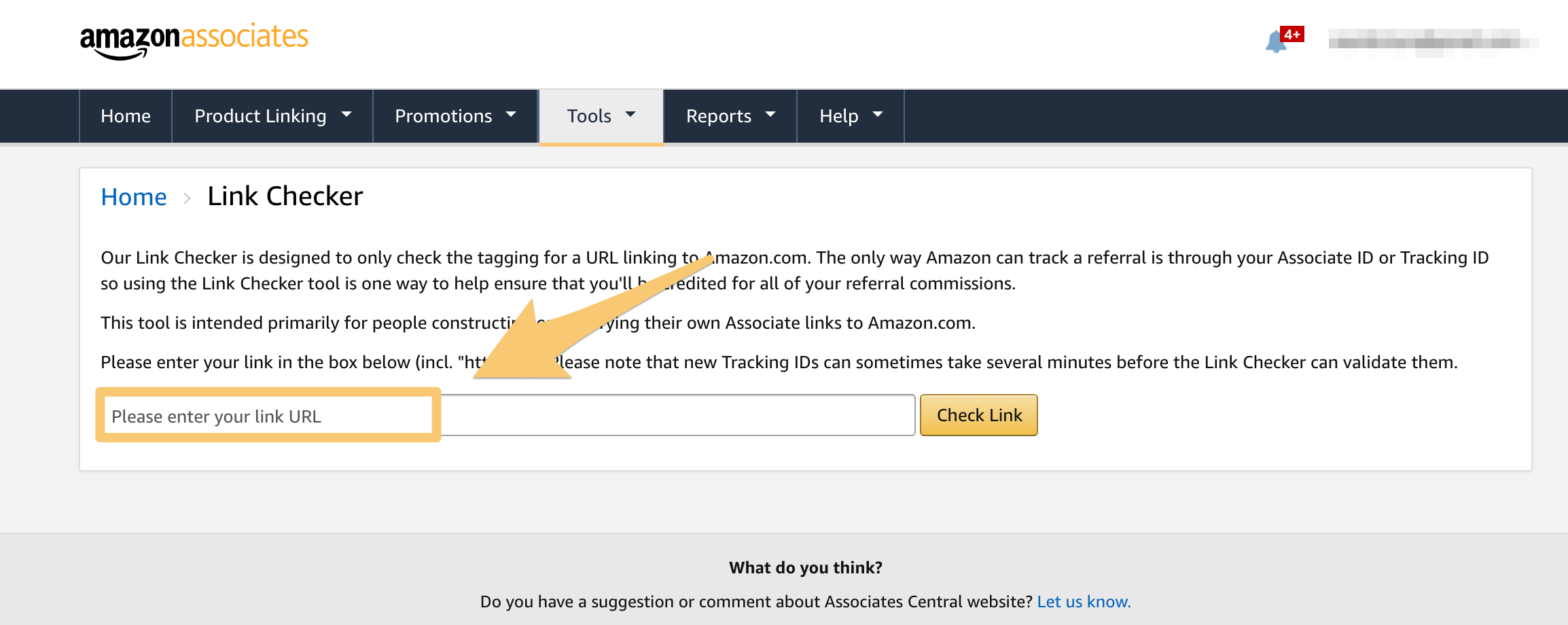
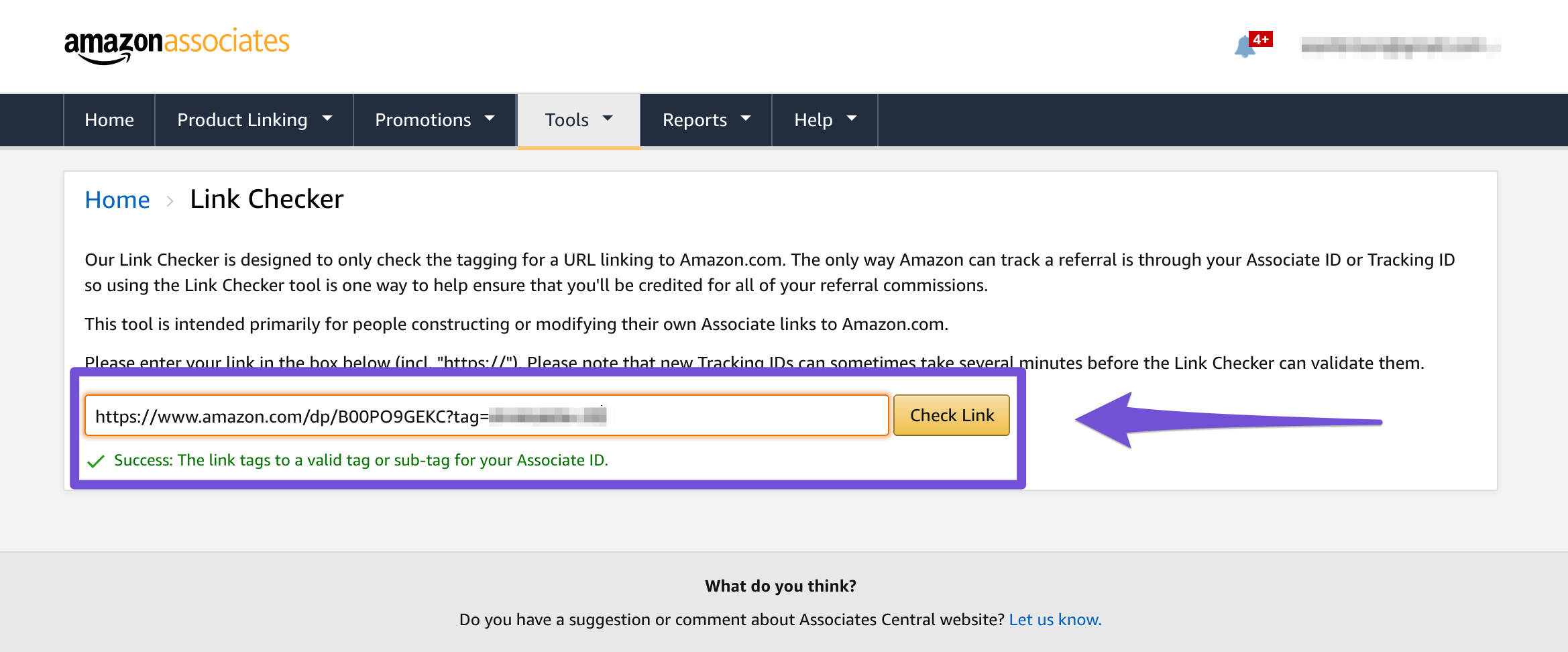
You will log in to your Associates Account, click “Tools,” and once the dropdown menu appears, select “Link Checker.” You are prompted to paste the URL of the link you want to check in the search bar below. After copying and pasting the URL and running a check, you will see a notification from Amazon telling you whether your link is good.
Amazon says the tool is best for any modified links created outside of Associates Central. The URLs you make inside Associates Central will be coded correctly. However, it is always good to know whether your links work, especially after you edit a post, swap a product recommendation, or migrate content from an older site.
Note: The Link Checker will not check the tagging for its served links, including Recommended Product Links and Widgets. If you rely heavily on those formats, you need a different verification approach.
2How Do I Find My Amazon Associates Link?
You can get Amazon affiliate links using Amazon’s tool, Site Stripe. The Site Stripe toolbar displays at the top of every Amazon page. You will see it as long as you are logged into Amazon with the same credentials as you do for your Associates account.
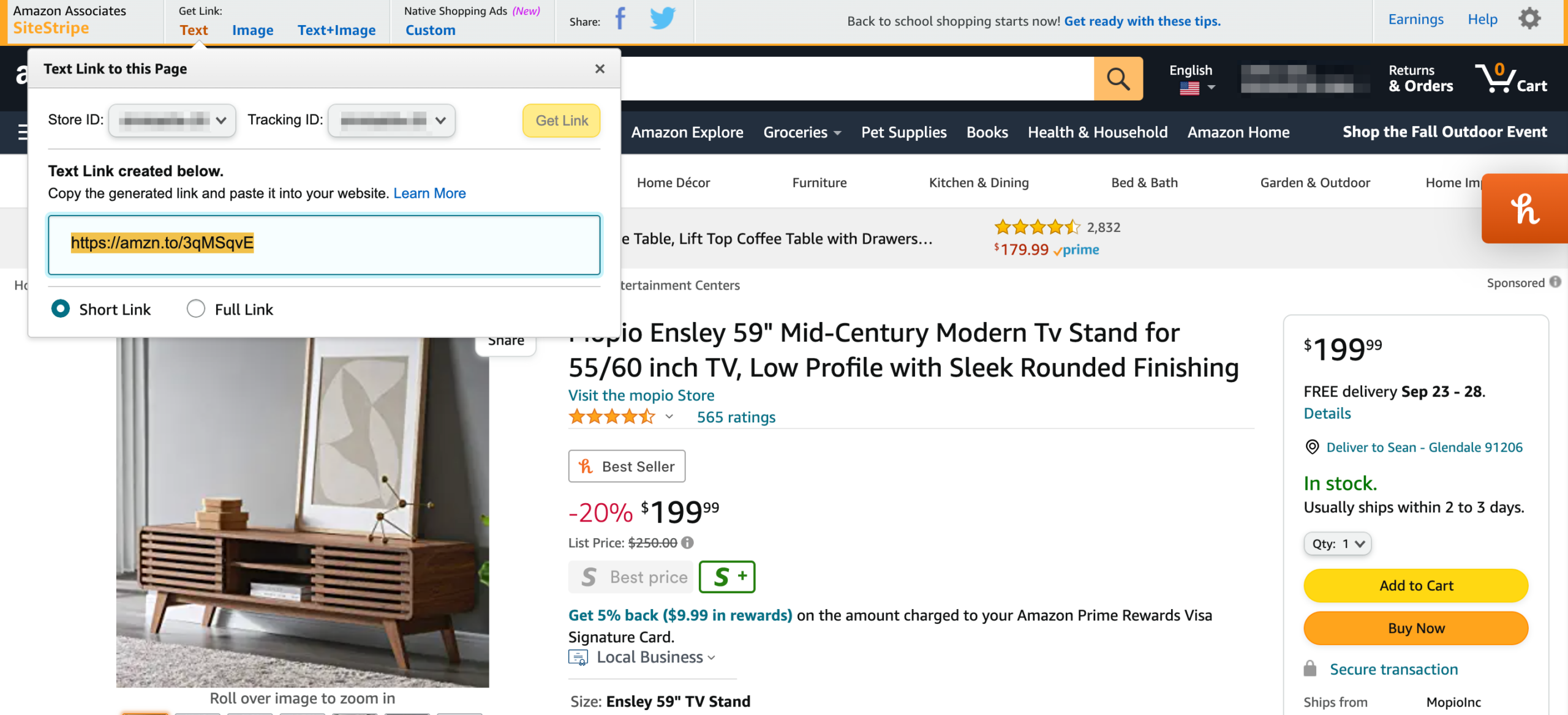
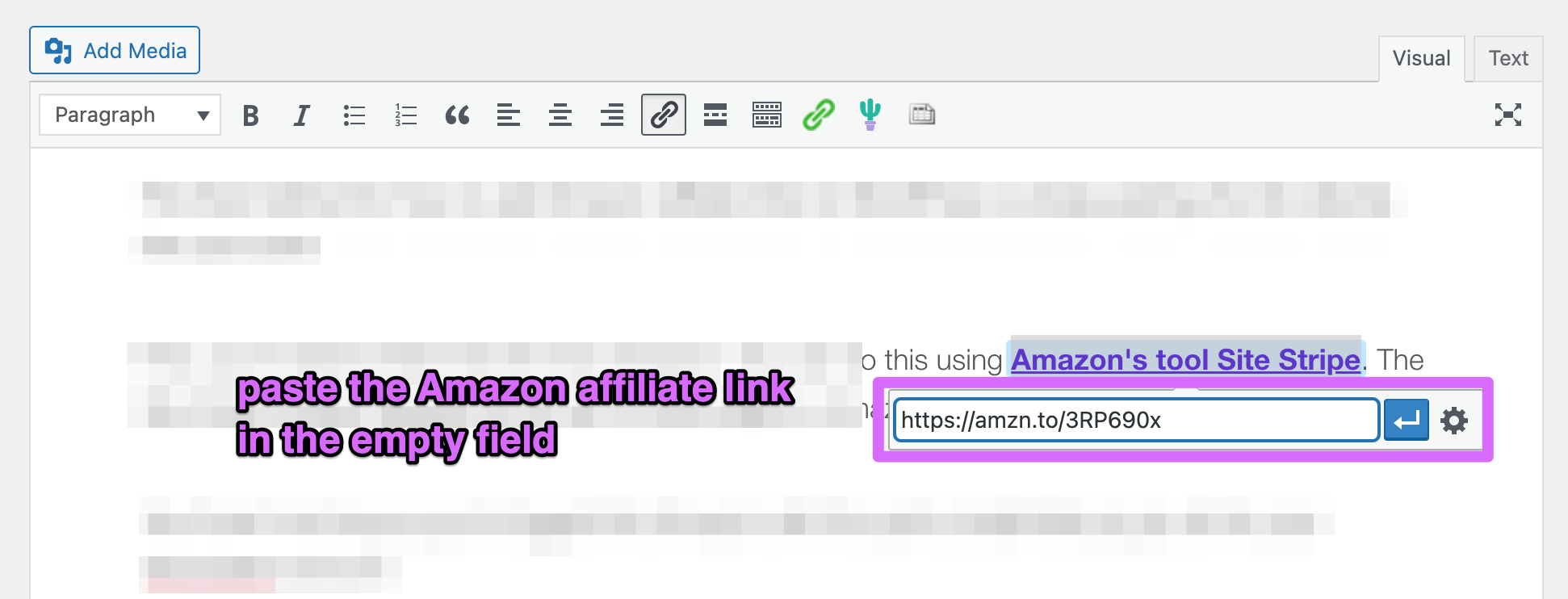
Here is how it works. Head to the page you want on Amazon and click the “Get Link: Text” button. Paste the link in the dropdown menu into your WordPress post the same way you would add any text link. You also have the option of adding:
-
Image links
-
Text + image links
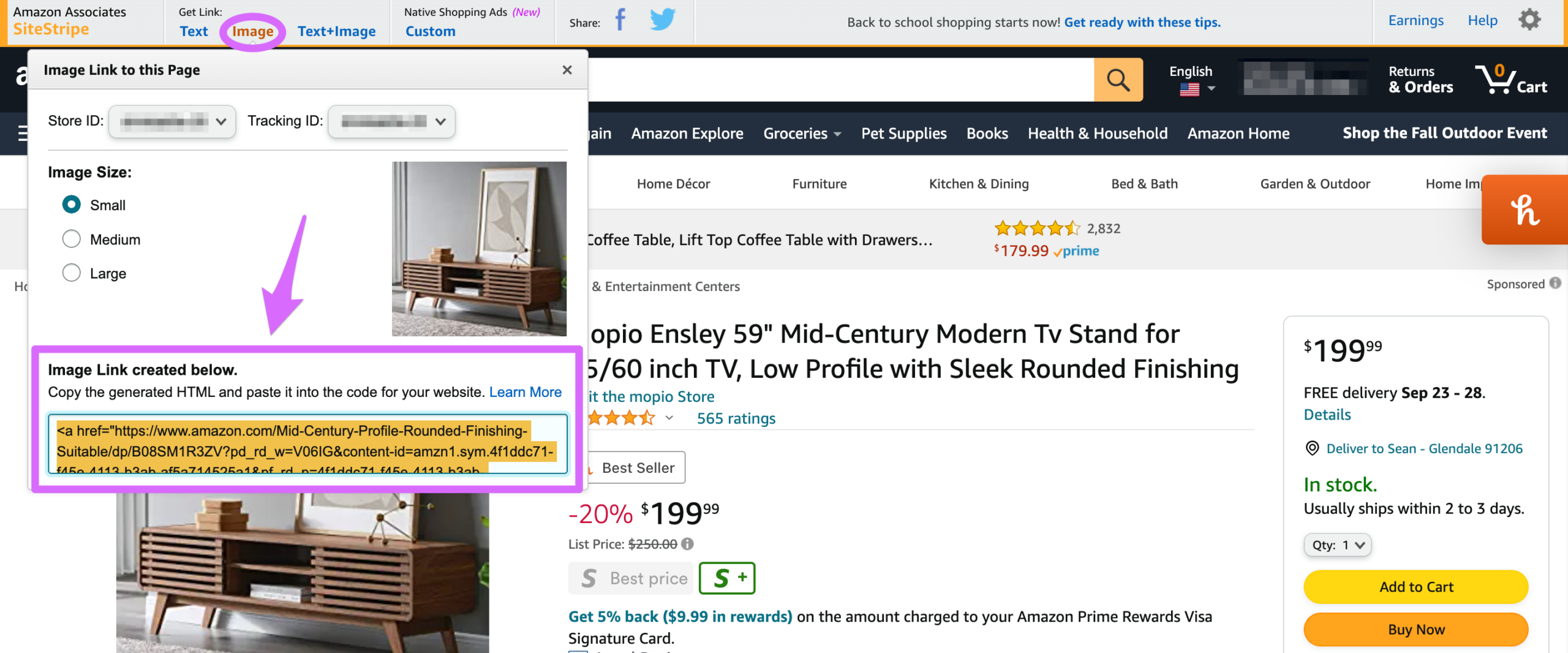
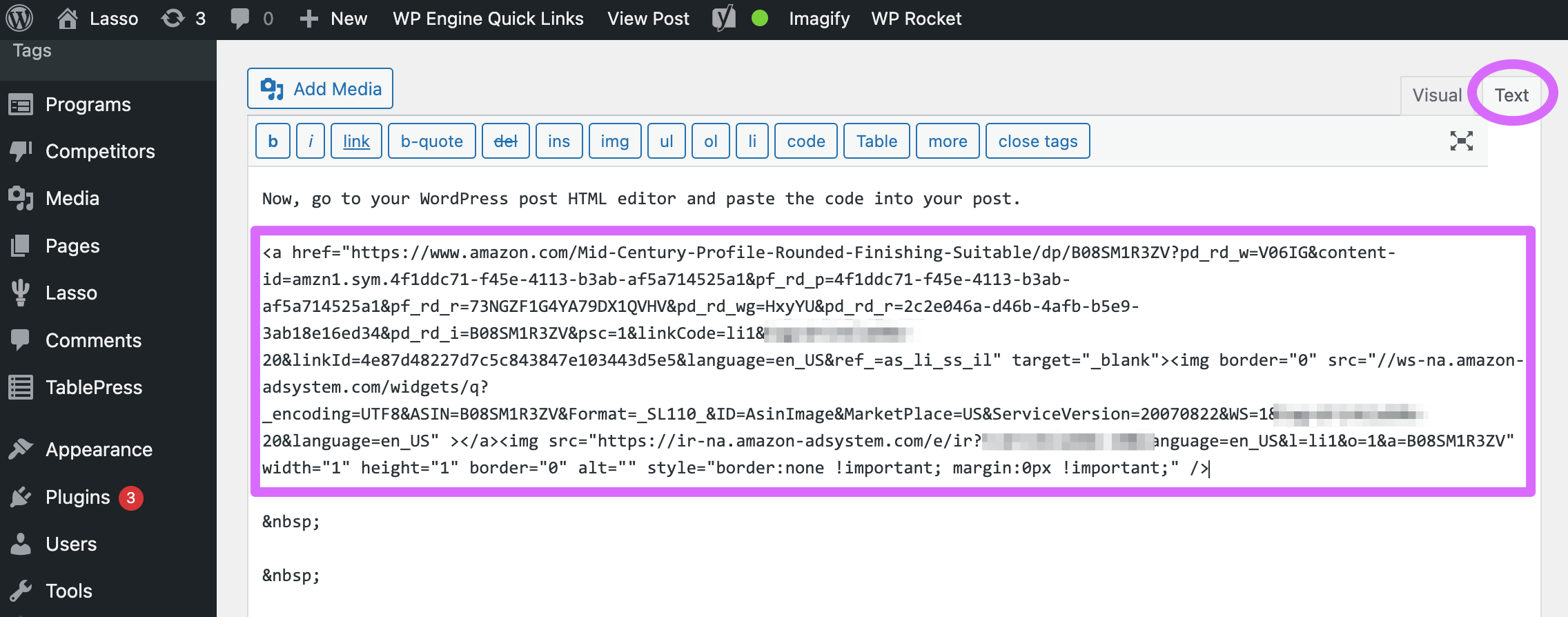
Sidenote: Adding “image” links or “text + image” links with Site Stripe requires pasting the HTML code and embedding it into your post. For example, select “Get Link: Image” to add an image affiliate link. Now, go to your WordPress post HTML (Text) editor and paste the code into your post. Here is how it will look. That is it. The link includes your affiliate ID, so Amazon will pay you for the referral.
Along with adding links to your posts and pages, you can also add sidebar widgets if your website features that functionality. Site Stripe also provides social media shareability if you promote on platforms outside your blog.
If you are new to the program or need a full walkthrough of signup, compliance, and link creation, our Amazon affiliate program guide covers the Associates setup in detail.
Further Reading:
- Amazon Affiliate Program: The Associates Simple Guide to Earning More This Year
3How Do You Tell If a Link Is An Amazon Affiliate Link?
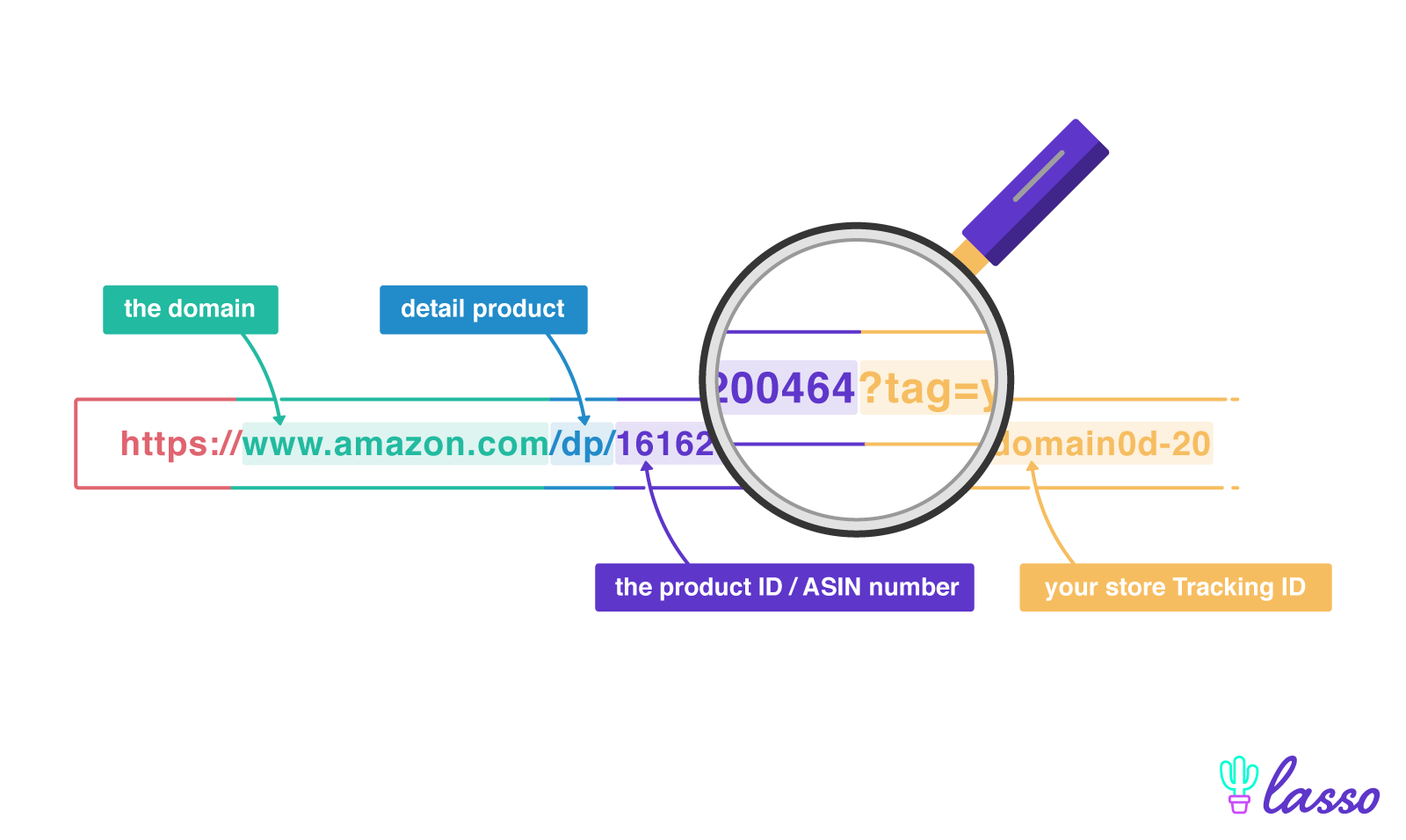
You can check whether your links are tagging to your account by looking at the URL. All links generated from Associates Central have three things:
-
A detail product (dp) indicator
-
Amazon product ID or ASIN number
-
Store or Tracking ID (your unique affiliate tag)
If any of those pieces is missing, you may still land on a product page, but you might not earn a commission. That is why spot-checking URLs matters, especially on older posts where links were pasted manually or copied from another source.
Anatomy of an Affiliate Link
Affiliate URLs are a hot mess of garbled numbers, letters, and characters. They are impossible to remember and hard to say on a podcast. Here is a real-life example of an Amazon affiliate link:
Typically, your ID starts with “?tag=” so next time you look at whether your link is tracing back to your website, check there first. It will usually look like this inside your URL:

- ?tag=YOUR STORE TRACKING ID
Then, to confirm your links are valid, you can contact customer support to see if your ID connects to your website URL. If this sounds time-consuming, you are right. However, automating the process is easier, which we will discuss below.

Copy and paste any Amazon URL into the dashboard and Lasso grabs the product title, image, and price automatically without needing API keys. Then, converts it to an affiliate link and updates that data every 24 hours.
Convert Your First Amazon Link
4Do Amazon Affiliate Links Expire?
Amazon affiliate links do not expire, but the cookie does. When a website visitor clicks your link, a piece of tracking data (aka a “cookie”) gets added to their browser. This action triggers a 24-hour countdown to make a purchase. You get credit for the sale if the person buys before the timer expires. Amazon’s cookie lasts 24 hours. It works like this:
-
A link gets clicked
-
The click activates a “cookie”
-
Cookies have a timeframe from when they are clicked until you purchase
-
If the person buys within that period, you will get a commission for the sale
Yes, 24 hours is a short time, but the upside is that if the person who clicked your link adds an item to their cart, the cookie window extends for another 89 days. For example, if someone adds an item to their cart, leaves Amazon.com, returns within 89 days, and buys, you will still get credit for that sale and earn a commission. That is the only way to get an extended cookie duration with Amazon.
Once you put an Amazon affiliate link (or any affiliate link) on your website, that link will stay active unless another variable occurs (e.g., the link breaks, the affiliate network changes, or the cookie expires). The URL itself does not time out. The earning window does.
Further Reading:
- How to Create A Successful Amazon Affiliate Website This Year
How Do I Promote My Affiliate Link?
There are many ways you can promote affiliate links. You can guest post or write product reviews. You could also try:
-
YouTube videos
-
Email marketing linking to your affiliate links (note: Amazon prohibits affiliate links in email; check their terms before using this channel)
-
Creating in-depth guides and tutorials focused on using a product
For example, if you are writing a product review, you could show your readers how to use the product, its benefits, its pain points, and so on. Your audience will appreciate the depth. You provide value for them by creating a review about something that would make their lives easier (while adding your affiliate link). It is a straightforward way to
Sidenote: Product reviews are one of three post types that convert higher because your readers are conducting commercial investigation and ready to buy. That is why they are searching for things like ConvertKit reviews or iPhone reviews.
We have a substantial amount of product reviews on our personal finance site, Listen
Further Reading:
- Amazon Affiliate Income: 9 Tips for Earning More This Year
5Can I Buy Through My Amazon Affiliate Link?
No, you cannot buy using your own Amazon affiliate link because it violates their Associates Program. You cannot even ask your friends or family to buy products via your links. If Amazon notices you are soliciting friends and family to buy through, you will not earn a commission, or, worse, you will lose your affiliate account. From Amazon:
You will not directly or indirectly purchase any products or take a bounty event action through special links… and you will not permit, request, or encourage any of your friends, relatives, or employees to directly or indirectly purchase any product…
They are strict when it comes to this. Play it safe and focus on SEO, organic traffic, and high-quality content to get clicks and commissions. Read Amazon’s Participation Requirements full policy for details.
6How Much Do Amazon Affiliate Links Make?
Earning
Here are Amazon’s fixed commission rates by category:
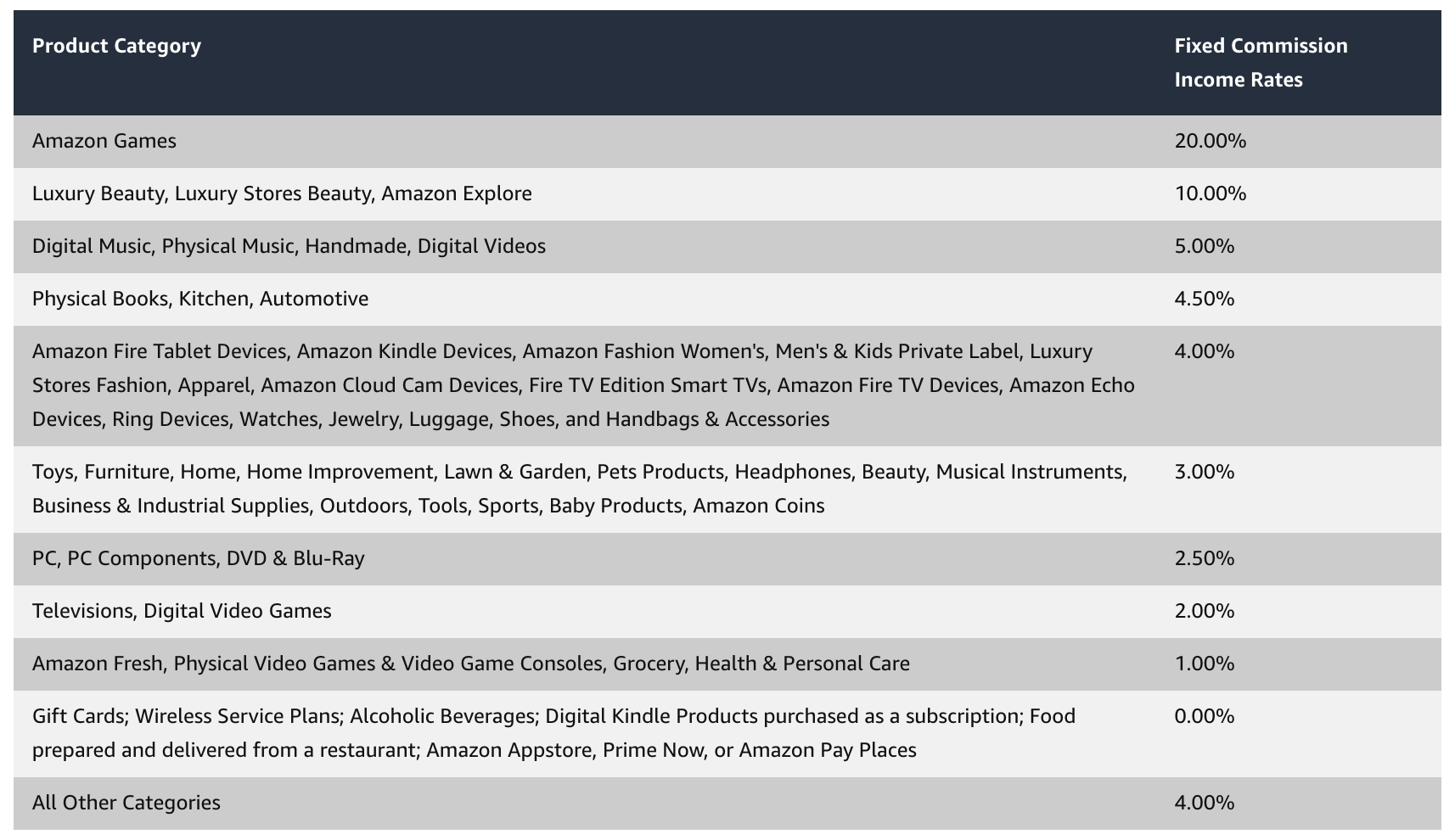
Again, depending on your strategy, you could target this list based on income rate percentage or product category. Then, weigh your interest level per category before deciding which topic to start blogging about. The rates shift over time, so treat the chart as a snapshot and verify current numbers inside your Associates dashboard.
Further Reading:
- Amazon Affiliate Commission Rate: (This Year’s Definitive Associates Guide)
7The Advantages of Using A Link Checker Tool
One of the best ways to optimize your affiliate marketing content is to check for broken links. URLs can become unreliable, broken, or malformed. If you do not know where they are, you lose
-
Unavailable products
-
404 pages (broken links)
-
Unreliable product listings
Another reason to use a link checker tool is to find monetization opportunities. For example, if you link to other products, brands, or keywords with an unmonetized affiliate link, that is lost income. Let us say you mention Asana in your blog content, and you link to their domain. Then you join their affiliate program and want to turn those links to Asana’s domain into monetized affiliate links.
Link checker tools can streamline the process with instant alerts without manually copying and pasting URLs into a search bar. Run an Opportunities Scan on your site to find product mentions in posts that already rank but are not monetized yet. Most operators find quick wins on the first pass.
Further Reading:
- 15 Proven Ways to Boost Amazon Conversion Rates
Alternatives to the Amazon Link Checker
If you are looking for other ways to monitor your affiliate links, try a tool designed for that specific purpose. Several are quick, easy, and automate the process, so it consumes less time.
Amazon’s Link Checker works for one URL at a time. That is fine when you are debugging a single post. It does not scale when you have hundreds of Amazon links spread across years of content. For WordPress publishers, a plugin built for affiliate link management covers scanning, alerts, and replacement in one workflow. Our Amazon affiliate WordPress plugin guide walks through how Lasso handles Amazon-specific link health on WordPress sites.
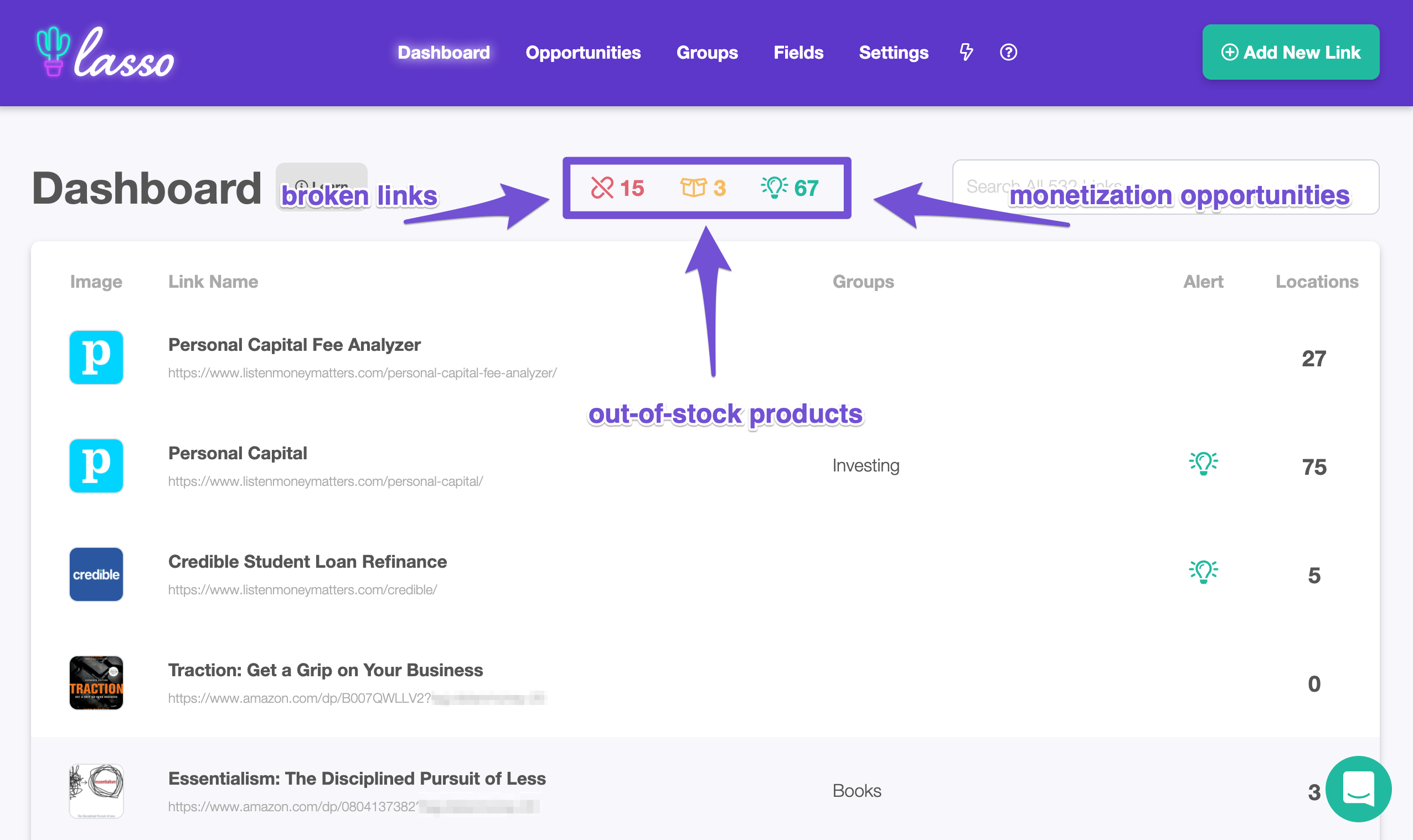
For example, if you are using Lasso to monitor your affiliate links, you will get notified when your links are broken, products are out of stock, and any monetization opportunities available on your site.
It is an excellent way to avoid sending your visitors to a broken link but also for finding new income opportunities you may have missed. You can install Lasso’s plugin in a few steps on your WordPress site. Once that is done, Lasso scans every link across your site. Then, it will detect which ones are broken or out of stock and look for ways to
Side Note: It is also good to use alternative affiliate programs to diversify your income so that you are not relying only on Amazon. Check out our database with thousands of programs categorized by niche.
Finding Amazon Affiliate Link Issues with Lasso
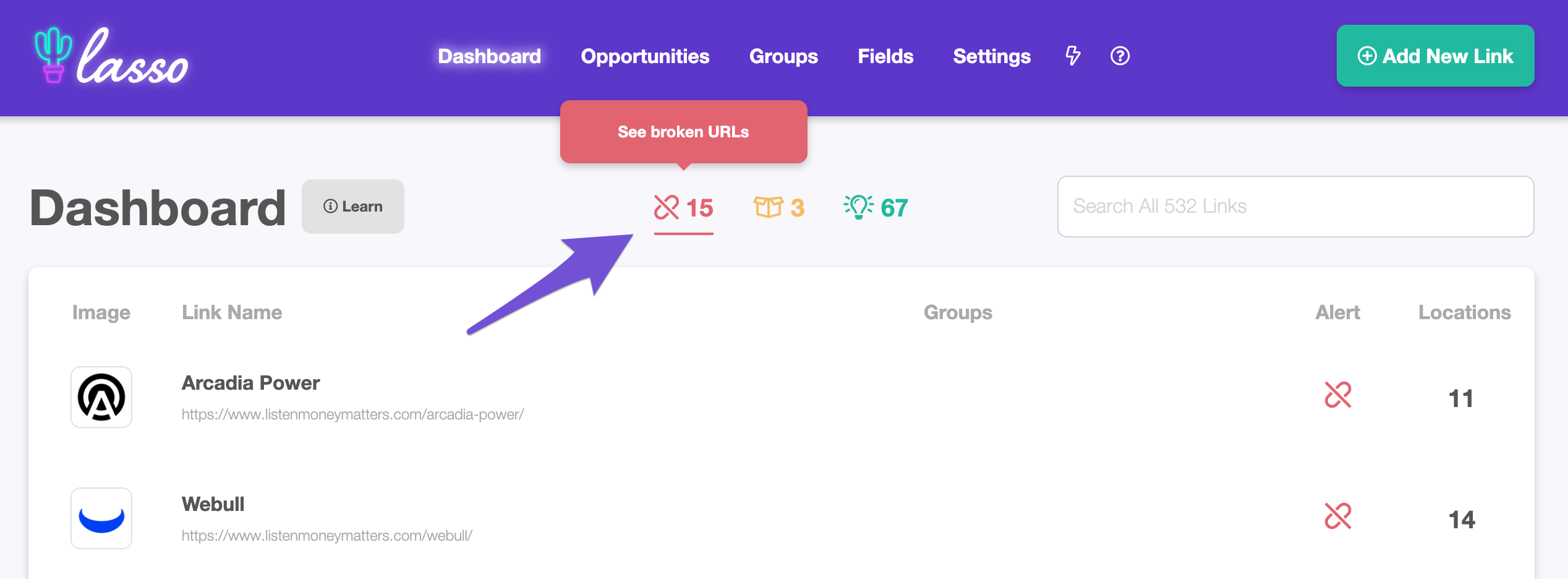
You can troubleshoot affiliate link issues with Lasso from inside your dashboard. It displays all broken URLs and out-of-stock products in a single location and income opportunities. Lasso runs on its own servers when checking your URLs, so it will not slow down your site. Unfortunately, most broken link checkers do not integrate with your server, resulting in your hosting provider banning them.
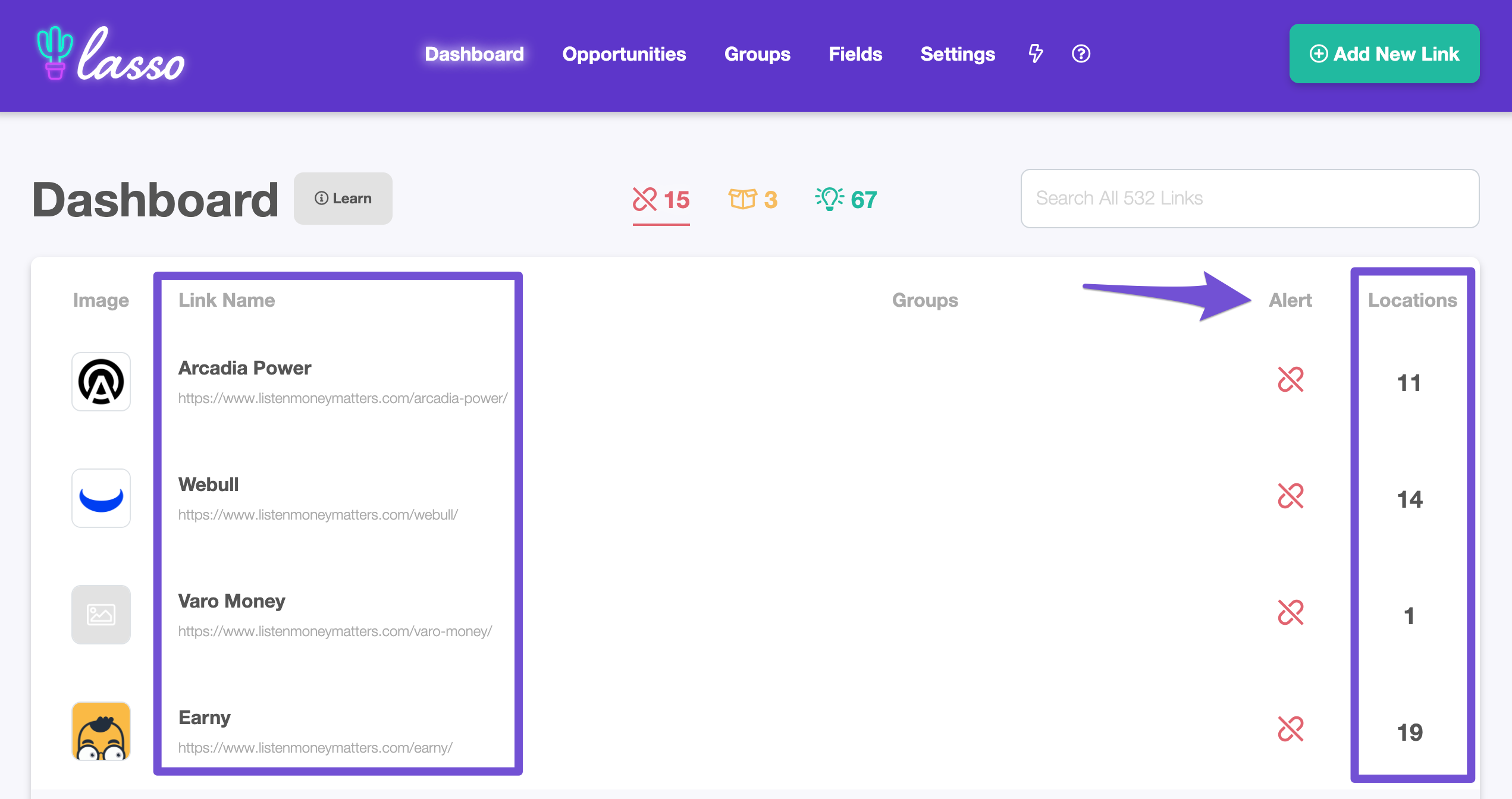
If you want to search for busted links, for example, click the red icon. Lasso displays every place on your site where they appear. You will see three columns:
-
Products with broken links
-
The alert type (in this case, “broken links”)
-
Number of locations where those broken links appear on your site
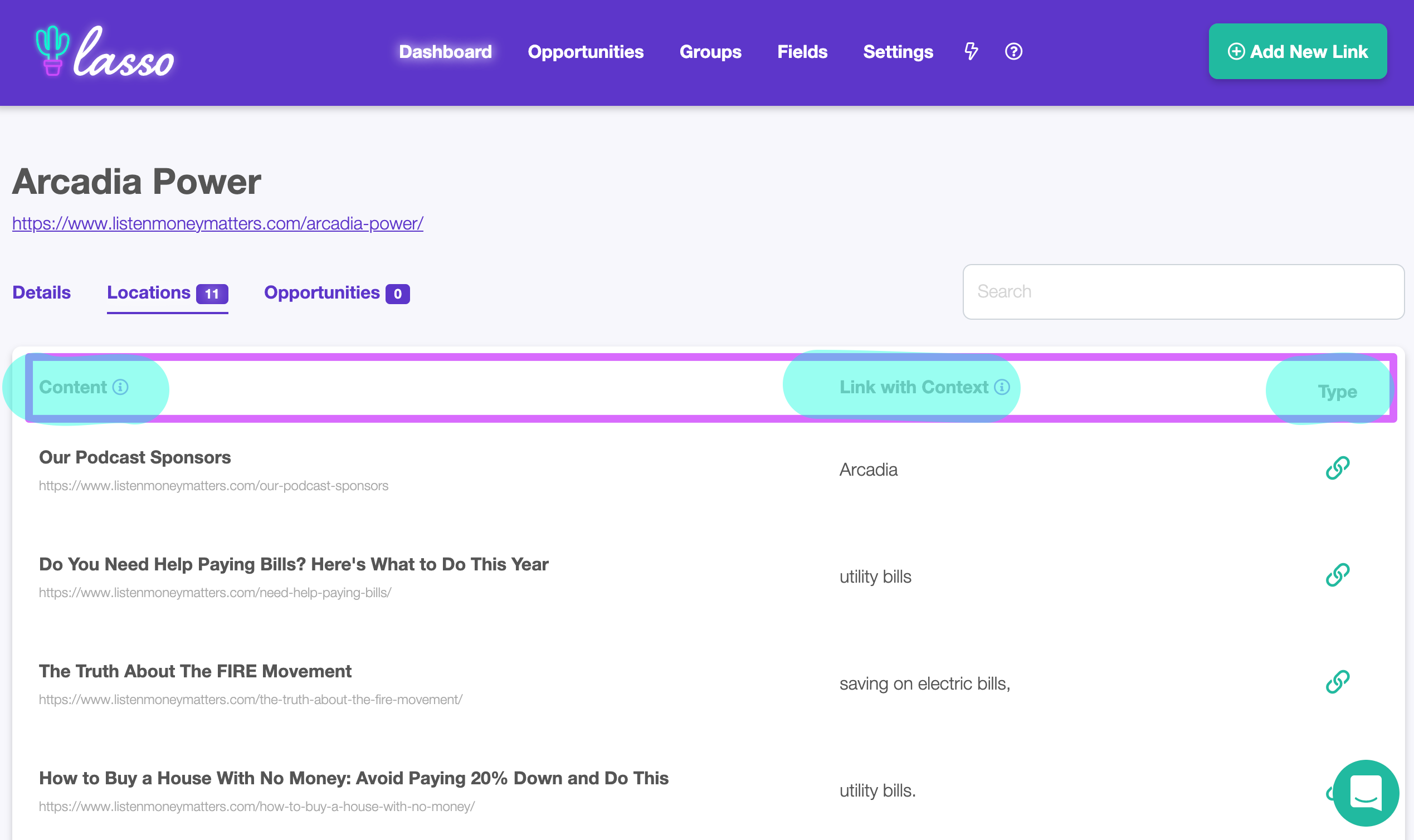
When you click “Locations,” Lasso shows each post with the broken link. For example, if I use the first affiliate product link on the top of the list, Arcadia Power, when I click “Locations,” I see this. This page shows you three things:
-
Link with context (anchor text used)
-
The content the link appears (e.g., a blog post)
-
Link type (whether it is a text link, image link, etc.)
Tip: Fix links getting the most clicks first. If they are already performing well, make sure you address your
An easy way to do this is with Google Analytics. Lasso integrates with Google Analytics so you can track every click’s performance. It will help you see which posts get the most clicks and by what affiliates. Then, you will know what posts perform best. For a deeper walkthrough of click-level data, see our guide to affiliate link tracking.
Adjust your site links as needed so you can incrementally make improvements and boost conversion rates. Rinse and repeat this process to check for out-of-stock products or monetization opportunities.
8The Last Word About the Amazon Affiliate Link Checker
The Amazon affiliate link checker is a useful tool when conducting one-off checks for your affiliate links. It confirms tagging on individual URLs and catches mistakes on links you built outside Associates Central. For a single post or a quick sanity check after an edit, it does the job.
One drawback of relying only on Amazon’s Link Checker is that it will not automatically alert you when links are broken unless you manually paste them into the tool. It also will not flag out-of-stock products, surface unmonetized mentions, or show you which broken links live on your highest-traffic pages. For operators running a site with a substantial link library, a streamlined process that monitors in the background makes more sense.
We built Lasso because link infrastructure should scale with content production. The bottleneck was never traffic alone. It was conversion per click and knowing when a link stops earning before your revenue report tells you.
See how Lasso fits your stack. Get started with Lasso today.

Sean Brison
Sean Brison is a dad, writer, business owner, and Content Lead at Lasso. He's spent the past several years in cahoots with Lasso's founder, Andrew, creating awesome things for people. He's also addicted to perfectly-balanced cocktails, the outdoors, and John…