Starting a counseling blog is exciting, but there’s a lot to tackle at first. You’ll need to figure out domain registration, WordPress setup, and how to create engaging posts. But once you have the basics down, it's time to dive into monetization!
I promise you, figuring out how to make money from your blog will be the highlight of your blogging journey.
Whether you’re just starting out or you're an experienced counseling influencer, there are plenty of ways to turn your passion into profit. Let’s explore each monetization strategy in detail!
Why You Can Trust Our Counseling Blog Monetization Guide
Lasso is installed on over 8,000 websites, including many counseling blogs.
Our team has built multiple 7-figure blogs in a wide range of niches.
We have hands-on experience working with founders to grow and monetize their counseling blogs.
1. Affiliate Marketing
Affiliate marketing is the best monetization method for counseling bloggers because it hits the sweet spot between time investment and earning potential.
Affiliate marketing is a form of advertising where a publisher (the site owner) links to a product in their content and earns a commission from the advertiser (the affiliate program) if readers click on that link and make a purchase.
TIP: With all monetization methods, the rule of thumb is the easier it is to accomplish, the less money you can make, and vice versa.
Also, since you can add links to your existing content, it’s the perfect method for beginners. You’ve already written content, so you’ve already done the hard part.
How to Start Affiliate Marketing for Counseling Bloggers
When it comes to affiliate products in the counseling blog niche, there are plenty of options that can benefit both you and your audience. Here’s a quick list of some great products to recommend:
- Online Therapy Platforms: These platforms allow users to connect with licensed therapists online. Products like BetterHelp or Talkspace can make therapy accessible.
- Mental Health Books: Recommend self-help books or workbooks tailored to specific issues. Titles by authors like Brené Brown can provide valuable insights.
- Wellness Courses: Offer courses on meditation, stress management, or emotional intelligence. Websites like Udemy or Mindvalley feature a variety of options.
- Journals and Planners: Journaling can boost mental health. Recommend guided journals or planners that help users track their moods and set goals.
- Mindfulness Apps: Apps like Headspace or Calm promote mental wellness through guided meditations and mindfulness exercises.
Here are a few reasons why these products can be a good fit:
- High Demand: Mental health awareness is growing, and people seek tools and resources to help them.
- Fulfill Needs: These products address common challenges like anxiety, stress, and personal growth.
- Diverse Range: They cater to various interests, ensuring broad appeal to your audience.
- Recurring Revenue: Many services are subscription-based, providing ongoing commissions.
- Trustworthy Brands: Partnering with reputable companies enhances your credibility.
Once you’ve identified which products will solve problems for your readers, you need to sign up for their affiliate programs.
You should start by joining the Amazon Associates affiliate program.
Most physical products in the counseling niche will be available on Amazon, and the conversion rate on Amazon is insane.
Yes, Amazon’s commission rates are rough, and they only offer a 24-hour cookie duration, but the conversion rate makes up for it. Plus, you’re nearly guaranteed to get accepted into their program.
For products that aren’t available on Amazon, just Google “[Product] affiliate program,” and you’ll find their program’s signup page.
To save you some time, here are a few of the best affiliate networks for counseling bloggers:
-

Commission Rate: $250+
Cookie Duration: 30 - 90 Days
Olavivo is a boutique affiliate network with a focus on Ecommerce, Health & Beauty, Sweepstakes, Gaming, Dating, Finance and Cryptocurrency.
-
Commission Rate: up to 25%
Cookie Duration: 90 days
SelfDecode combines your DNA, labs and lifestyle to provide you with personalized recommendations based on 350+ health risks.
-
Commission Rate: 40%
Cookie Duration: 30 days
Loka Yoga School are world-renowned leading experts in yoga, breathwork and meditation. Their courses are internationally certified and accredited with Yoga Alliance.



TIP: We maintain a database of the best affiliate programs. Click here to see the best health and wellness affiliate programs.
Once you’ve been approved for the product’s affiliate program, the program will give you your affiliate link, and you can start inserting it into your content.
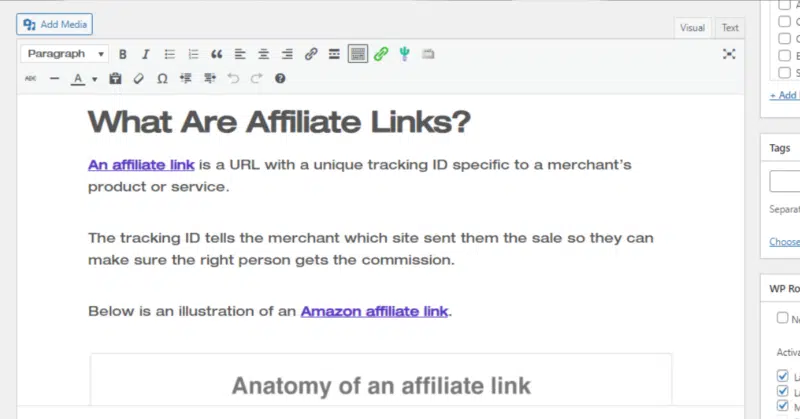
How To Monetize A Counseling Blog With Affiliate Marketing
To add your link to your content, go to your post editor, highlight the relevant text, and insert the link.
Here are a few best practices for adding affiliate links to your WordPress blog:
- Add links where it’s helpful. Adding too many links to your blog posts is just like adding too many ads; it’s annoying. Add links to product titles, images, CTA buttons, and the first time you mention a product. That’s plenty.
- Disclose your links. Every blog post with affiliate links should have a disclaimer at the beginning, and every CTA or product image should also.
- Use direct sales language. When you are writing your call to action, be direct. It’s not rude to say, “Check the price” or “Buy this product today.” Being too passive makes you look unconfident.
Or, take it a step further by creating product displays.
You Can Double Your Affiliate Sales With Lasso Displays

You can create displays manually using the post editor to add links to images and buttons.
However, it can be time-consuming to create these displays and keep them updated if you’re doing it all by hand.
Luckily, monetizing your blog with affiliate links is simplified when you’re using a tool like Lasso.
Lasso makes it super easy to add links and product displays to your posts. You can add product displays to posts right from the post editor; no coding is required. It’s as simple as clicking your mouse three times.
You can also automatically import product info from retailers like Amazon. Just paste the link into the Lasso dashboard, and Lasso will populate the display with the product title, image, and price.
With all of this, remember to follow the guidelines in the affiliate program’s terms and conditions. Amazon, in particular, is pretty stringent.
But everything Lasso does is compliant with Amazon Associates’ TOS, so you never have to worry about being booted from the program.
That’s just scratching the surface of what Lasso can do to help you monetize your counseling blog. If you’re ready to start making a serious affiliate income from your counseling site, sign up for Lasso today.

A WordPress plugin that lets you add, manage, and display your affiliate links from any program, including Amazon. Increase conversions. Find new affiliate link opportunities. Earn more revenue! Less than 5 minutes to set up.
Affiliate Marketing Pros and Cons for Counseling Bloggers
Affiliate marketing can be a great way for counseling bloggers to monetize their content. You get to earn commissions by promoting products or services you believe in. It's a win-win because you help your audience find valuable resources while also making some extra income.
However, there are downsides to consider. It can be a challenge to find the right affiliate programs that align with your counseling niche. If the products aren’t a good fit, your audience may lose trust in your recommendations. Plus, competition can be fierce, so standing out requires creativity and strategy.
On the bright side, once you set it up, affiliate marketing can generate passive income. You write a post once, and it can keep earning for you over time. Just remember, quality content and authentic recommendations are key to sustaining that income.
2. Display Ads
The second best way to monetize your counseling blog is with display ads. Ads are the internet's favorite monetization method, but they have severe drawbacks.
How to Monetize a Counseling Blog With Display Ads
Monetizing a counseling blog with display ads couldn’t be easier.
First, choose an ad network to join. Networks have traffic requirements, so here are the best ad networks to join based on your site’s page views:
- 100,000+ Visitors per month - Raptive
- 50,000+ Sessions per month - Mediavine
- < 50,000+ Visitors per month - Ezoic
NOTE: WordPress is an open-source software found on WordPress.org. WordPress.com is a premium blogging platform, but you never need to pay to install WordPress on your website, even if it’s self-hosted.
Once you’re accepted to an ad network, follow their instructions to integrate their ads into your site. They will have documentation for every type of content management service (WordPress, Joomla, Ghost, etc.).
If your chosen ad network has a dedicated accounts manager, they will guide you through getting their ads on your site.
And… that’s it. Let the ads run and wait for your deposits to hit your account.
TIP: Optimize your display ads for user experience by using your chosen network’s software settings or talking to your account manager. Keep the ads in the sidebar and footer whenever possible.
You’ll make a lot of money in the long run if you put your readers ahead of quick profit.
Display Ad Pros And Cons For Counseling Bloggers
Display ads can be a double-edged sword for counseling bloggers. On the one hand, they have the potential to generate revenue with relatively little effort. By placing ads on your blog, you can monetize your content without changing your writing style or compromising your message.
However, display ads can also be distracting for your readers. When visitors come to your site for valuable content, they may find ads interruptive. This could lead to lower engagement or even push some readers away, impacting your reach and credibility.
Another thing to consider is that not all ad networks pay equally. Some may provide better returns than others, so it’s wise to do your homework. Additionally, managing ads requires time and can be tricky, especially if you're trying to ensure they align with your counseling message and ethical standards.
3. Digital Products
Selling your own digital products is a great way to increase your earnings per visitor in the counseling niche.
A digital product is anything you can sell on your counseling blog that the customer will receive via download.
Digital Products to Sell on a Counseling Blog
- Workbooks: Interactive guides for various issues like anxiety, depression, or grief that help clients work through their feelings.
- Online Courses: Self-paced modules covering topics like stress management, parenting, or relationship building with video and downloadable content.
- Guided Meditations: Audio tracks that help individuals practice mindfulness and relaxation techniques.
- eBooks: Informative books on coping strategies, self-improvement, and mental health tips available for download.
- Printable Journals: Templates for daily reflection, gratitude, or mood tracking that users can print out and use.
A lot of people search for simple checklists and guides related to different topics. They’d happily pay you for them.
Pros and Cons of Selling Digital Products for Counseling Bloggers
When counseling bloggers consider selling digital products, they enjoy a flexible income stream. It's a great way to monetize their expertise without the overhead of physical goods. Products like e-books, online courses, or printable worksheets can reach a global audience without any shipping hassles.
However, there are downsides. It can be tough to stand out in a crowded market. Competition is fierce, and creating high-quality products takes time and effort. There’s also the challenge of marketing. Not all bloggers are comfortable promoting their own work, which is essential for success in this endeavor.
Moreover, selling digital products requires ongoing support. Customers might have questions or need assistance, which can take up valuable time. Also, dealing with tech issues, like website glitches or payment processing problems, can be frustrating if you're not tech-savvy.
Ultimately, selling digital products can offer great rewards but also comes with its challenges. It’s crucial to balance your passion for counseling with the need for innovative marketing and customer service skills.
How To Monetize a Counseling Blog By Selling Digital Products
The first thing to do is create your digital product.
Look at which content your audience interacts with the most, and brainstorm digital products to help serve their search intent.
That’s what I did when I created our Ultimate Blogging Guide:
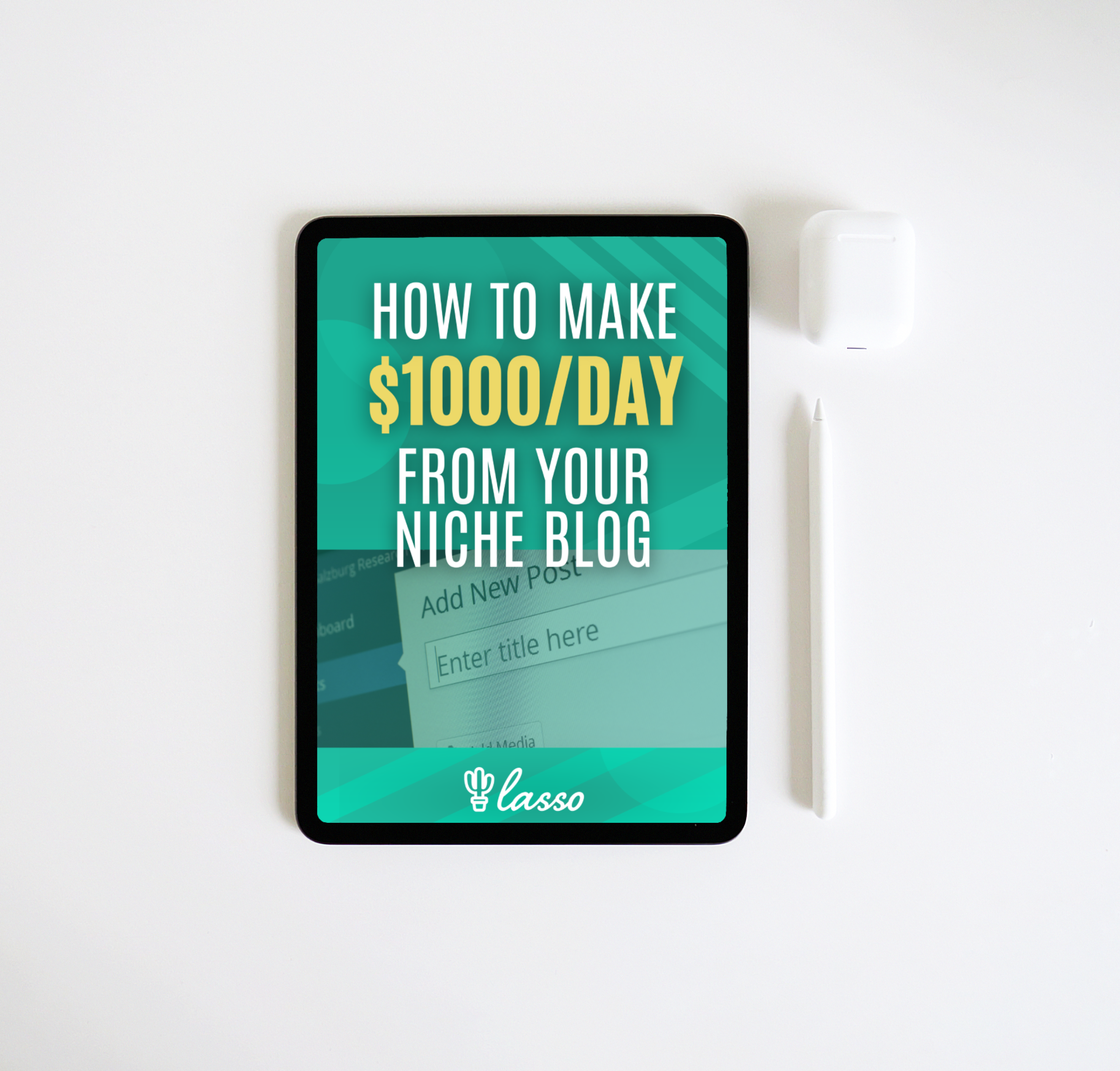
Get Your FREE 20-Page Guide To Making $1000/Day From Your Niche Blog
Then, create the product using whatever tools are at your disposal. For example, use Microsoft Word to create an ebook PDF, or Google Sheets to create interactive spreadsheets and checklists.
Next, you have to figure out how to distribute your product. The easiest way to distribute PDFs is by uploading them to your WordPress media library. Then you can give customers the link, and they can download the PDF from there.
Lastly, you’ll have to set up payment processing and order fulfillment. A plugin like Woocommerce can automate most of this, but you’ll have to tie it to a processor like Stripe or PayPal.
Woocommerce can even connect to an email tool like ConvertKit, so as soon as your customer finishes their checkout, they’ll get an email with a link to their download.
TIP: You can still use Lasso to get more clicks to your digital products. Just create a Lasso display with the link pointing to your product’s sales page.
Barring any issues, you won’t have to do anything but watch your bank account grow.
4. Email Newsletter
One effective way to monetize a counseling blog is by creating an email newsletter. This method allows you to build a loyal audience and engage with your readers on a more personal level. Let's explore how to monetize a counseling blog with an email newsletter and the pros and cons of email marketing for counseling bloggers.
How to Monetize a Counseling Blog with an Email Newsletter
Email newsletters are a powerful tool for counseling bloggers. They offer a direct line of communication with readers, allowing you to share valuable content and promote your services. By nurturing a loyal email list, you essentially create a ready-made audience that trusts your expertise. This can lead to various monetization opportunities, such as selling services, courses, or affiliate products.
To effectively monetize your counseling blog through email newsletters, start by building your subscriber list. Offer a lead magnet, like a free e-book or a mini-course, in exchange for email sign-ups. Once you have an audience, engage them with high-quality content that emphasizes their mental health needs. Whether it's tips on coping strategies or information on new therapeutic techniques, your insights can help solidify your authority in the field.
Next, you’ll want to nurture your subscribers. Regularly send out newsletters that provide significant value while integrating offers subtly. For example, you could share a personal story of how a particular technique helped your clients and then offer an online workshop that delves deeper into that topic. This builds trust and opens the door for organic sales, as readers will feel more inclined to buy when they see you as an expert who truly cares.
Lastly, consider incorporating affiliate products or services into your emails. This could range from mental health workbooks to online courses that complement your counseling expertise. Just ensure that the products align with your content and ethics. Transparency is key, so let your readers know you're sharing affiliate links and that they help support your blog. This not only adds an additional revenue stream but can genuinely benefit your audience by providing curated resources they might appreciate.
Pros and Cons of Email Marketing for Counseling Bloggers
- Pros:
- Direct Communication: Reach your audience directly without relying on social media platforms.
- Builds Trust: Regular communication helps foster a relationship, enhancing your credibility as a counselor.
- Higher Conversion Rates: Email marketing has consistently shown higher engagement and conversion rates compared to other platforms.
- Segmented Audiences: Tailor your emails to different segments of your audience for more personalized content.
- Cons:
- Takes Time: Building a list and creating valuable content requires ongoing effort and commitment.
- Privacy Concerns: You'll need to handle personal data responsibly to maintain trust and comply with regulations.
- Unsubscribes: Not everyone will want to stay on your list, and managing unsubscribes can be disheartening.
- Overcrowded Inbox: Your emails may get lost in a sea of other emails, making it harder for your messages to stand out.
5. Consulting and Coaching Services
Consulting or coaching is exchanging your expertise and time for a fee. Your customers need an expert, and you’ve proven yourself to be that expert.
As you become an authority in the industry, people will reach out to you with questions about topics they consider you an expert in.
Now, you don’t have to charge for being helpful, but you should place a dollar value on your time.
As a counseling blogger, you extensive knowledge of the industry. If a reader reaches out to you asking for help, you should get paid for that effort.
How To Monetize A Counseling Blog With Consulting Services
Monetizing a counseling blog with consulting services is similar to selling sponsored posts.
Put a “Coaching” option in your nav bar that goes to a landing page outlining your consulting services and your hourly rate. This will help head off some of the people looking for free advice.
TIP: Again, you can use Lasso to drive more clicks to your coaching pages. Just create a Display with a link to your sales page, and insert it into blog posts.
Then, wait for requests to come in, evaluate them, and propose your offer. If the customer accepts, send them an invoice using PayPal or another payment processor, and schedule the call.
Pros and Cons of Selling Consulting Services for Counseling Bloggers
Selling consulting services for counseling bloggers can be really rewarding, but it has its ups and downs. On the bright side, you get to share your expertise and help others grow. Many bloggers are eager for personalized advice, making it a lucrative opportunity. Plus, you can set your own rates and work at your own pace.
However, there are challenges to consider. Marketing your services can be tough, especially with so much competition. You'll need a solid strategy to stand out. Additionally, managing client expectations is crucial. Not everyone will be satisfied, and navigating that can be tricky.
Time management is another factor. Balancing client work with your own blogging can get hectic. It may distract you from your content creation, which is the heart of your brand. Remember, your reputation as a blogger depends on your ability to produce quality content, so keep that in mind.
In short, selling consulting services offers great potential but requires careful planning. Weigh the pros and cons based on your goals. Decide if the benefits outweigh the challenges for your personal journey as a blogger.
Supercharge your earnings with Lasso. Create no-code product Displays and Tables that convert, find and fix broken links, and gain valuable business insights with revenue analytics.
Learn MoreCounseling Blog Monetization FAQs
What Is The Best Way To Make Money From Counseling Blogging?
If you want to build a successful counseling blog, then affiliate marketing is the best way to monetize it. It’s the least intrusive way to make a lot of money from your site without much extra effort.
Can I Make A Full-Time Income From Counseling Blogging?
Absolutely! Some counseling blogs, like Ashley Turner and Good Therapy get hundreds of thousands of monthly visitors. That’s enough for a full-time income for a small team of people.
How Do I Start a Counseling Blog?
Learning how to start a counseling blog is the first best way to use your expertise to start an online business.
You need to register a domain, install WordPress, and publish great content. It's a lot of work, but totally worth it!
How Do Counseling Bloggers Get Paid?
Most counseling bloggers make money through affiliate commissions and advertising fees. Both of these monetization methods pay out one or two months after the fees have been generated.
Some counseling bloggers also sell sponsored posts, consulting services, or their own products. In these cases, a payment processor like PayPal or Stripe is necessary.
Is Counseling Blogging Easy?
Nothing worth doing is truly easy, but that doesn’t mean counseling blogging isn’t fun.
As a counseling blogger, you’ll get to go places, try new things, and meet new people. And it will be part of your business! What could be cooler than that?
Is It Worth Starting A Counseling Blog?
It’s absolutely worth it to start a counseling blog. Not only can you make a living from it, but you can also build a community and control the conversation.
Once you’re an established authority, people in counseling-related industries will take you seriously.
Final Thoughts on Monetizing a Counseling Blog
Congratulations! You’ve learned all the ways to monetize your counseling blog step by step.
But here’s a bonus tip for you: Use multiple monetization methods!
Diversifying your income streams is key to protecting your business.
If you promote affiliate offers, run display ads, and sell your own products, you’ll be more resilient if something changes.
With a multi-tiered approach, hard work, and some careful planning, you’re on your way to earning what your blog truly deserves!
Why You Should Trust Our Counseling Blogging Content
You may be thinking, "that's all great, but what does Lasso know about counseling blogging?"
Quite a lot, actually.
Here's why you can trust our process for building a successful counseling blog:
We've Built Wildly Successful Blogs
Lasso is built for affiliate marketers, by affiliate marketers. We're not gurus; we've walked the walk.
Our team members have built multiple blogs from the ground up, some of them earning over seven figures in revenue.
We put that experience into every guide we write, so you can trust we're giving you a process that works.
We Talk To Counseling Bloggers Every Day
Lasso's WordPress plugin is installed on over 8,000 websites, including a lot of counseling blogs.
Our team supports those bloggers every day as they create awesome content and earn lots of money.
These communications give us a bird's-eye view of what's new in the counseling industry. We take that information and use it to keep these guides as up-to-date and accurate as possible.
We're Super Nerds
We've put a lot of company focus into learning everything we can about blogging, affiliate marketing, SEO, and anything to do with online entrepreneurship.
We attend conferences, collect high-level contacts, read tons of books, and distill all of that information into our content. We pass information onto you that was previously only available to industry insiders.