
Most publishers treat website monetization like a late-stage add-on. They build traffic first, then bolt on ads or affiliate links and hope something sticks. The data tells a different story. Operators who plan revenue from day one compound faster because every piece of content they publish has a job to do.
I’ve been running affiliate sites for over nine years, and the biggest lesson is simple. Monetization is infrastructure, not decoration. You need the right methods for your traffic level, the right tools to execute, and a niche that actually pays. This guide covers all three.
You will learn twelve proven ways to earn from your site, what to consider before you commit to any of them, how to pick a profitable niche, and the SEO tools we use daily to drive traffic that converts.
Updated 2026.
1Website Monetization Methods
If you want to earn
1. Affiliate Marketing
Affiliate marketing is the gateway into online revenue because the barrier to entry is low. Most affiliate programs do not require a minimum traffic threshold to sign up. You join a program, pick products relevant to your audience, and earn a commission when readers buy through your links.
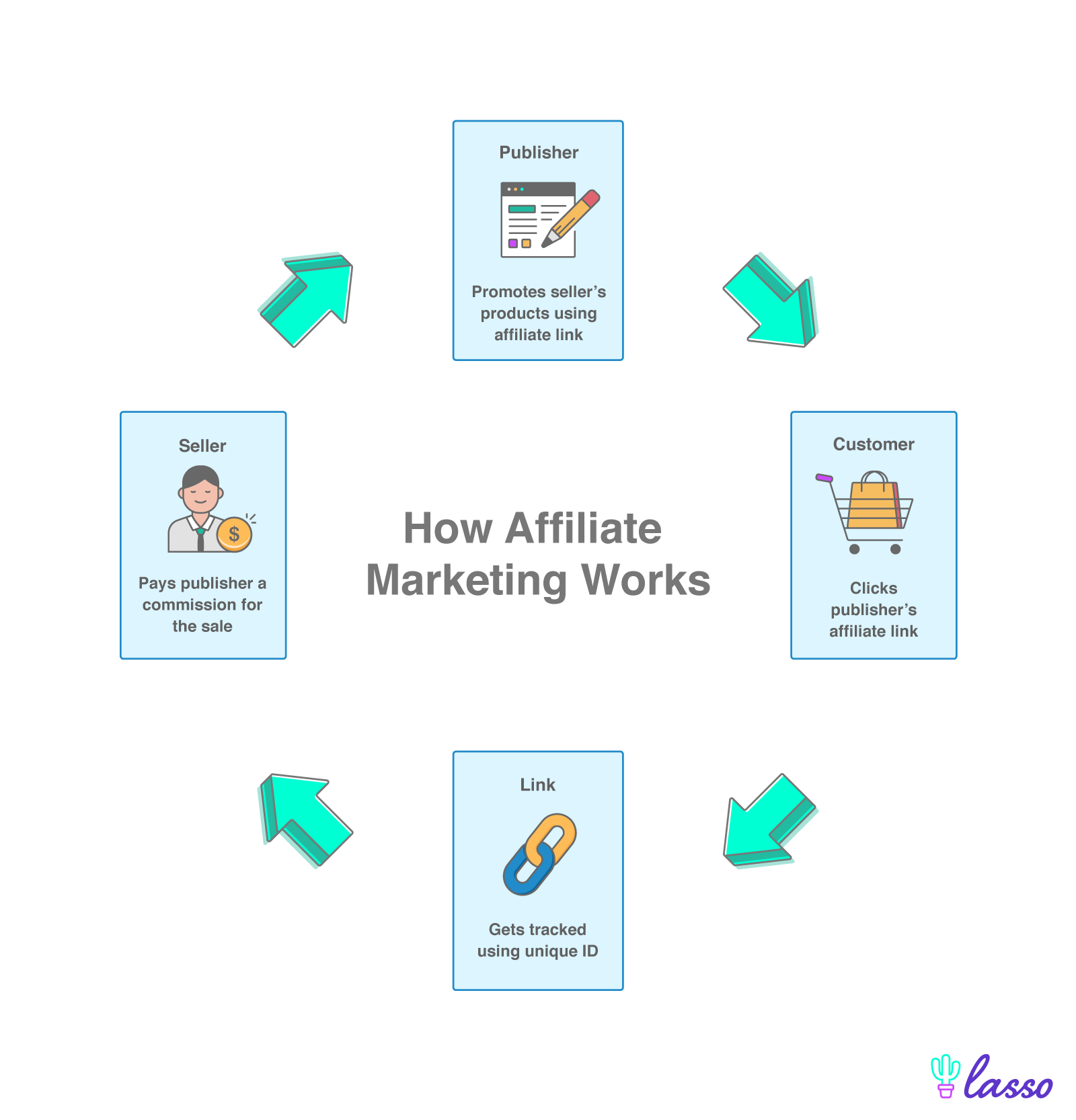
The model is straightforward. You promote products in product reviews, best lists, and product comparisons, then include affiliate links to them. For operators building at scale, the content format matters as much as the products you choose.
Why reviews, best lists, and product comparisons?
These three content types carry higher conversion rates because the person searching is in commercial investigation mode. When someone searches for “iPhone SE reviews” or “WP Engine reviews,” they are likely considering a purchase. You are meeting them at the moment of intent.
Best lists fall under the same category. A person searching for “best iPhones” or “best hosting platforms” is closer to buying than someone reading a general how-to article. You get to round up multiple products on a single page, each with its own affiliate link. More relevant links in one place means more chances to earn.
Product comparisons pit two or more products against each other. This is another high-converting format because the searcher has narrowed their options to a short list. “Product vs. product” posts also tend to attract substantial search traffic over time.
Resources pages account for over 10% of our site’s revenue. This page type can become the most trafficked destination on your entire site. They can be anything from best-sellers to a list of your favorite tools to popular products in your niche.
You can head to our Toolbox page to see it in action. Simply put, a Resources page can make you more
Head to large affiliate networks like CJ Affiliate (formerly Commission Junction), ShareASale, or Amazon to get your links. If you want the full playbook on getting started, read our affiliate marketing for beginners guide.
TIP: If you are still struggling to find more ideas for products to review, watch this video at the 7:50 timestamp on finding “vs.” and “review” keywords at scale.
Our database lists over 2,100 affiliate programs in 65 niches you can sign up with to
Here is how to squeeze every dime out of your affiliate marketing site with Lasso in five steps.
Before you scale new placements, run an Opportunities Scan on content you already published. Most operators find product mentions sitting unmonetized in posts that already rank. Fixing those placements is often the fastest path to higher earnings.
2. Sell Digital Products
You can create an online course or ebook and sell it on your site indefinitely. You frontload the work, so once it is done, there is little ongoing maintenance. Selling your own products is not the easiest method on this list, but it can become a reliable revenue stream over time.
Most of the work happens once you have created the digital product and a landing page to promote it. Our site in the personal finance niche built several online courses that provide a steady stream of income.
If you are selling online courses, you can host them on platforms like Podia or Gumroad. These platforms give you distribution infrastructure so you can focus on the product itself.
We use Podia, which is a great place to both sell and market your work.
Podia lets you sell online courses, memberships, downloads, and more. We use their platform exclusively for every course we’ve created. You can also market your work via email marketing and custom websites – even start your own affiliate program. Their support has been top-notch at every step.

We earn a commission if you make a purchase, at no additional cost to you.
We also built an affiliate marketing plugin for WordPress that we sell on a monthly and yearly subscription. That product exists because we needed it to run our own portfolio of sites. Building tools for your own problems is one of the most reliable paths to a digital product business.
3. Monetize Your Email List
Capturing emails does not generate income on its own. We do not advise selling your email list. But a strong email list makes almost every other monetization method work better.
If you write an ebook, create a course, publish sponsored content, or launch premium content, your list gives you a direct channel to readers who already trust you. You earned that trust when they gave you permission to appear in their inbox.
That means they want to hear from you. Email is still the best way to keep them informed about site updates, new products, and recommendations worth their time.
You can sign up with platforms like ConvertKit or ActiveCampaign to run your email marketing campaigns. These platforms handle the heavy lifting so your personal inbox is not overwhelmed with reader replies.
4. Pay Per Click Advertising via Google AdSense
Google AdSense is the best-known PPC (Pay Per Click) program. The PPC provider creates ads based on your website’s content that target your audience.
You can choose which ads to run and where they display on your site. Here is how a banner ad displays across Search Engine Journal’s site.
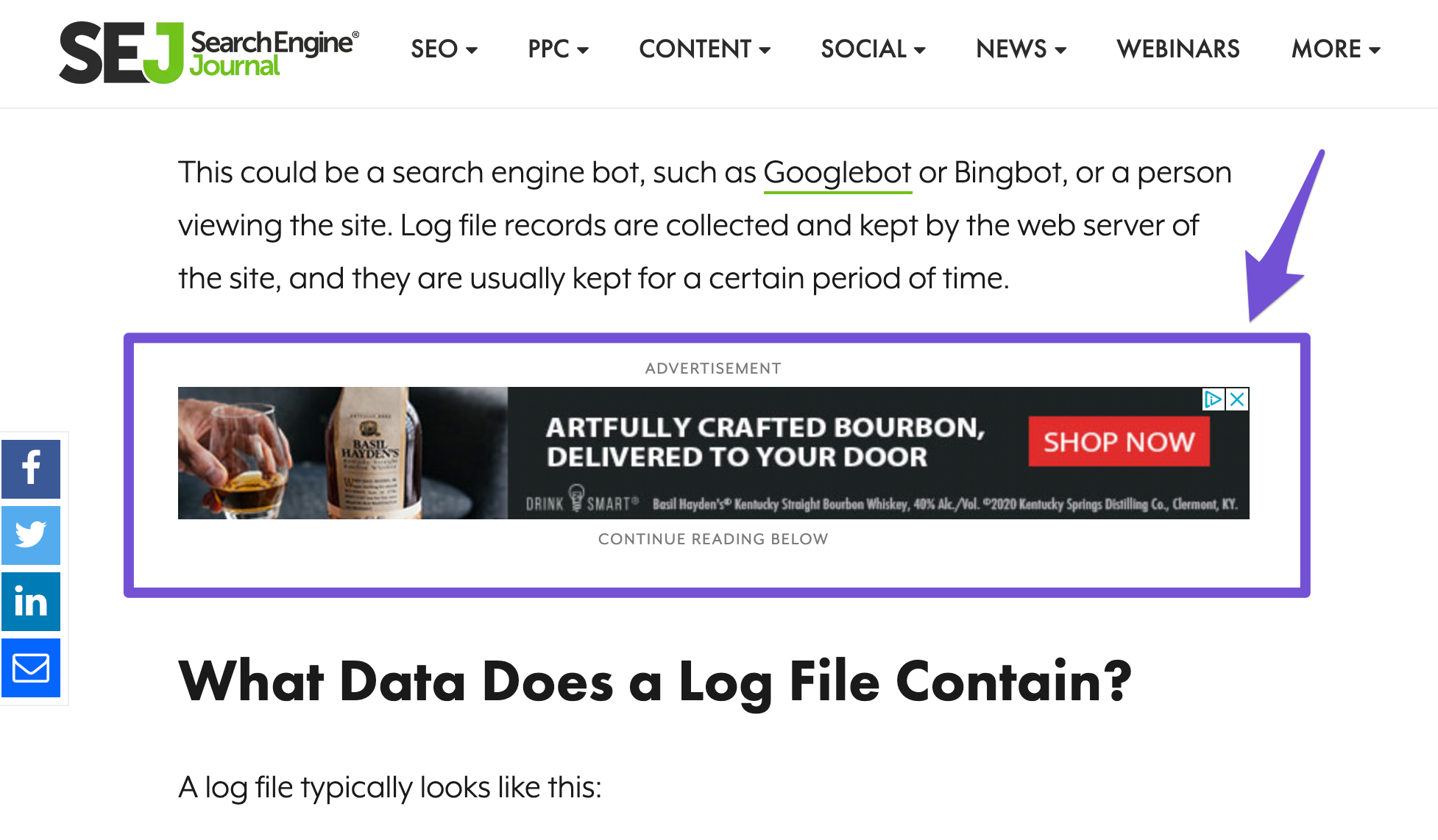
Google runs ads relevant to your reader. If the ad is not based on your site’s content, it can be based on the reader’s browsing history. Each time a reader clicks on an ad, you earn a small commission.
Once you are approved, you add a piece of code to your site. Google provides a tool on its home page where you can calculate an earnings estimate.
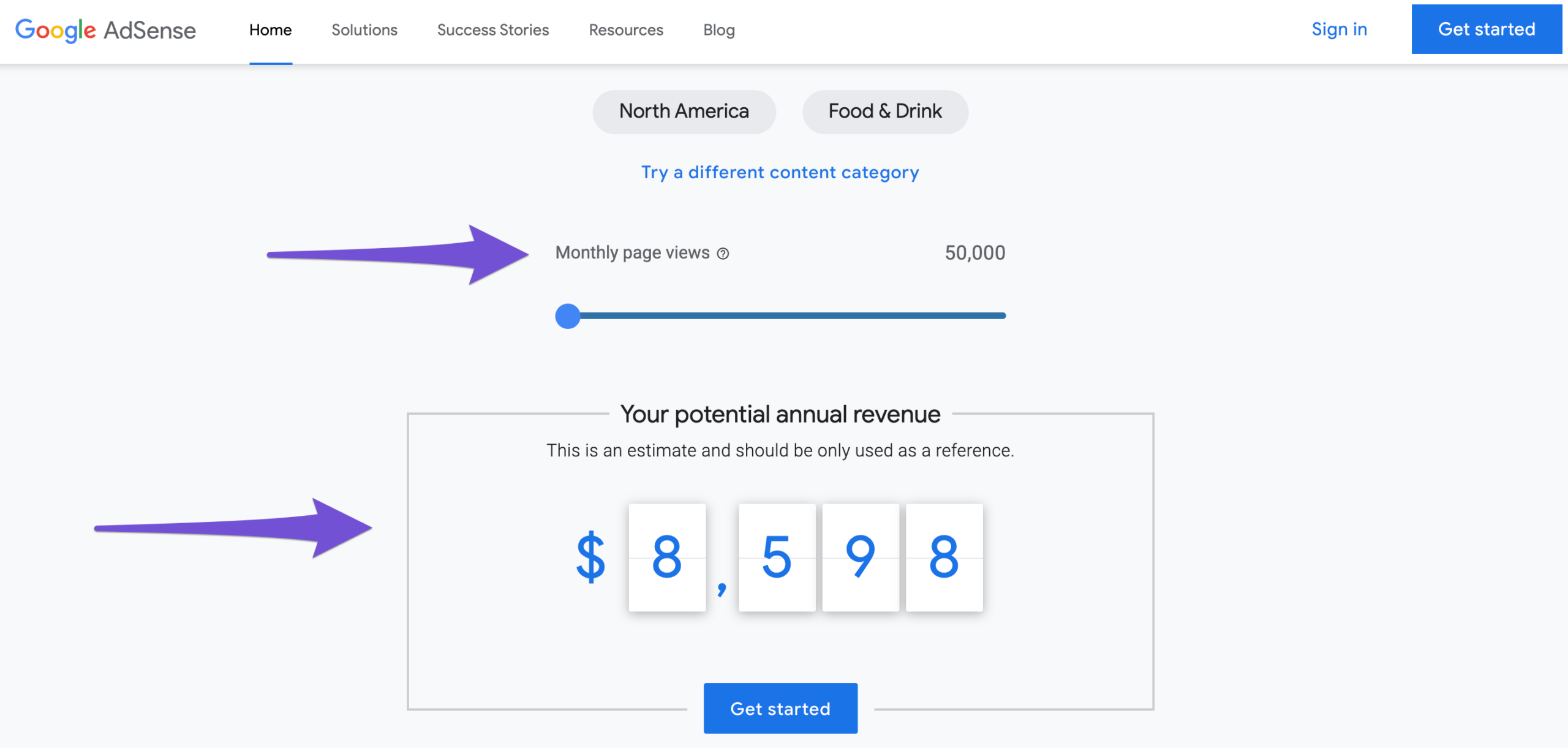
However, it is only an estimate. You also need a substantial amount of page views to make decent
For operators with lower traffic, AdSense can still work as a baseline. Just set expectations correctly. Display ads reward volume. Affiliate marketing and owned products often reward intent, which is why we recommend starting there if your traffic is still growing.
Further Reading:
5. Sell Ad Space
Piggybacking off the AdSense example, you can directly sell ad space if you have a heavily trafficked site. There are several types to use, including pop-up ads, banner ads, and display ads located in your site’s sidebar.
They can also be sold on a CPA (Cost Per Action) basis, which means you are paid when a reader takes a desired action. That action might be adding their information to an email list for a newsletter or engaging on a social media platform.
You can sign up on various networks, including:
-
Ezoic
-
Mediavine
-
AdThrive
Some have minimum page thresholds or other requirements, so read their terms before creating an account. To make good
The tradeoff is control. When you sell ad space directly or through a premium network, you often earn more per thousand impressions than AdSense. But you also need the traffic to qualify, and you are giving up sidebar or in-content real estate that could go to affiliate displays instead.
6. Generate Leads
Lead generation is similar to affiliate marketing, but you do not have to entice the reader to purchase to earn a commission. Companies pay you to send traffic to their site, and the reader you send does not have to complete any action, including:
-
Stay on the page for a certain length of time
-
Buy products
-
Sign up for anything
This strategy lets you introduce two parties to each other, and that is it. You are paid for the referral itself.
You can sign up on places including:
-
Peerfly
-
OfferVault
-
GlobalWide Media
Lead gen works best when your content already attracts readers in a specific vertical. Insurance, finance, and home services are common examples. The payouts can be strong, but program terms vary widely. Read the fine print before you promote anything.
7. Publish Sponsored Posts
Many companies will pitch a sponsored post, also called native advertising, to bloggers whose content is relevant to the company’s products or services.
Be sure to disclose any sponsored posts and only accept them for things your readers will find helpful. It is better to turn down offers that are unrelated than to sell something inferior to your audience.
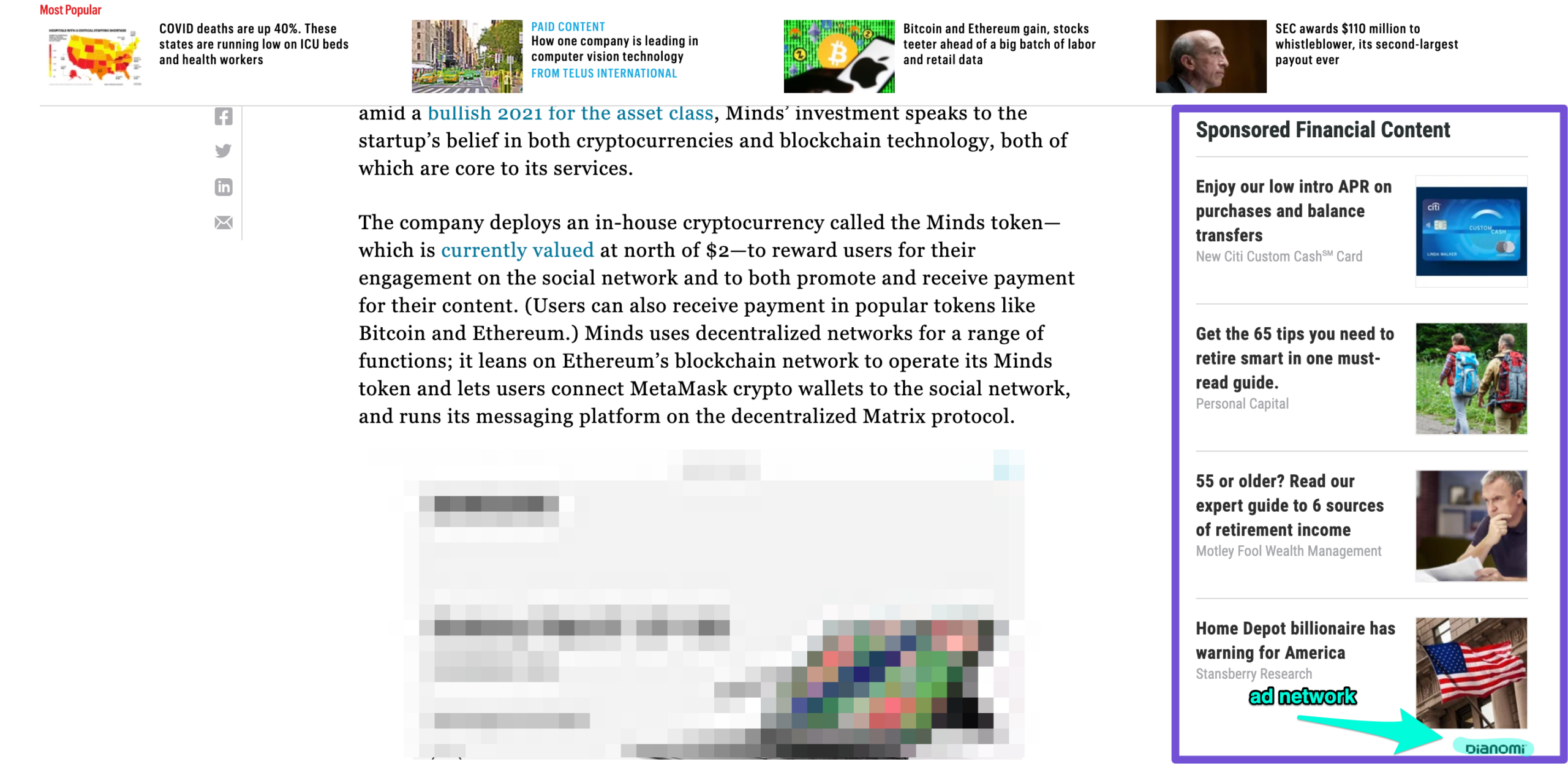
Readers trust your opinion. If you let them down, you lose that trust quickly. You can see why they coined the term “native advertising” in the screenshot below.
The sponsored content blends in with the original site, and the ad network’s name displays very small.
You can sign up on platforms including:
-
Taboola
-
Dianomi
-
Outbrain
Takeaway: The primary benefit of this advertising style is that it is less disruptive and gives your visitors a better user experience than aggressive banner placements.
Sponsored content also scales with your authority. As your site grows, inbound pitches increase. Set your rates early and stick to editorial standards that protect the reader relationship you spent years building.
8. Offer Premium Content
To sell premium content and make
One of my favorite sites, Messy Nessy Chic, offers premium content for “keyholders.”

These are the things keyholders get access to for $4.99 per month:
-
City and restaurant guides, maps, travel eBooks
-
Access to a travel concierge, social club, and secret content
-
No ads
-
15% off all Messy Nessy books, gear, and gifts
As you can see, the site offers a lot for $4.99 a month. People are used to seeing everything online for free. If you want to entice them to pay for content, you have to make the value obvious.
Your premium content can come in the form of a membership site where readers pay you monthly to gain access to material not readily available to everyone else. The operators who succeed here usually pair exclusive content with community access or direct interaction.
9. Hold a Paid Webinar
Holding a webinar is similar to selling consulting services but allows you to address a group rather than speaking one-on-one.
If you do not have a lot of free time and have several interested readers, a webinar is more efficient than working with people individually. You prepare once, deliver live or recorded, and sell access to the replay.
Another benefit of paid webinars is you can run them from anywhere. All you need is expertise your audience will pay for and a platform to host the session.
Webinars also double as list-building tools. Even a free preview session can convert attendees into buyers for a deeper paid workshop later.
10. Ask for Donations
Some people may have a problem asking readers for a donation, and others may be offended by seeing a donate button. I think those people are in the minority.
Most people know that maintaining a website and creating good content is not easy. It is time-consuming, and no one’s time is free.
You can join Patreon, add your PayPal or Venmo address to your site, and let people know they can help support what you do by joining your Patreon or donating directly.
Donations work best when you have a loyal audience that values your work independently of any product you sell. Niche communities with strong identity tend to support creators they trust.
11. Add a “Hire Me” Page
Consider offering your content marketing or consulting services on a “Hire Me” page. Your website is your portfolio, and you do not have to go through a freelancing site like Upwork or Guru that takes a cut of your earnings.
As website owners, we put a lot of hard work into building a site that offers a great user experience, whether it is a passion project or strictly a way to earn
This method can be one more tool in your kit. Below is a screenshot of successful blogger and entrepreneur Ryan Robinson. He monetizes his site in many ways, and his “Work With Me” page is only one of them.
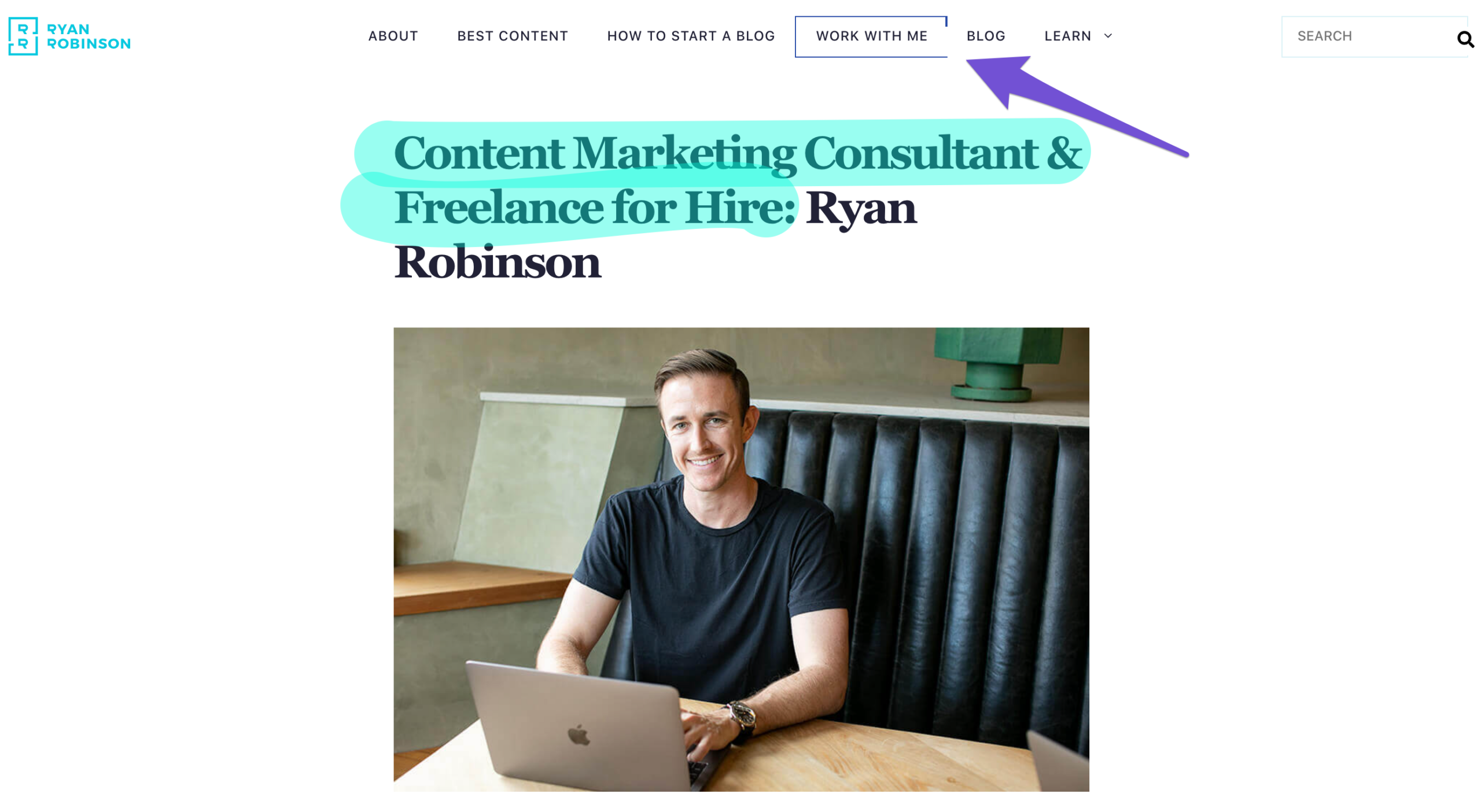
Consulting rates in specialized niches can be substantial. I have talked to SEO operators who charge $1,800 for a one-hour site audit. The constraint is time, not demand. A “Hire Me” page helps filter inbound requests so you spend time on paid work, not free advice.
12. Sell Merch
If you would like to create buzz around your brand, selling merch to your audience is a solid way to do it. You can create an online store on your website and use a dropshipping platform to warehouse and ship it.
Check out how Thomas Frank from College Info Geek added a “Merch” page to his blog.
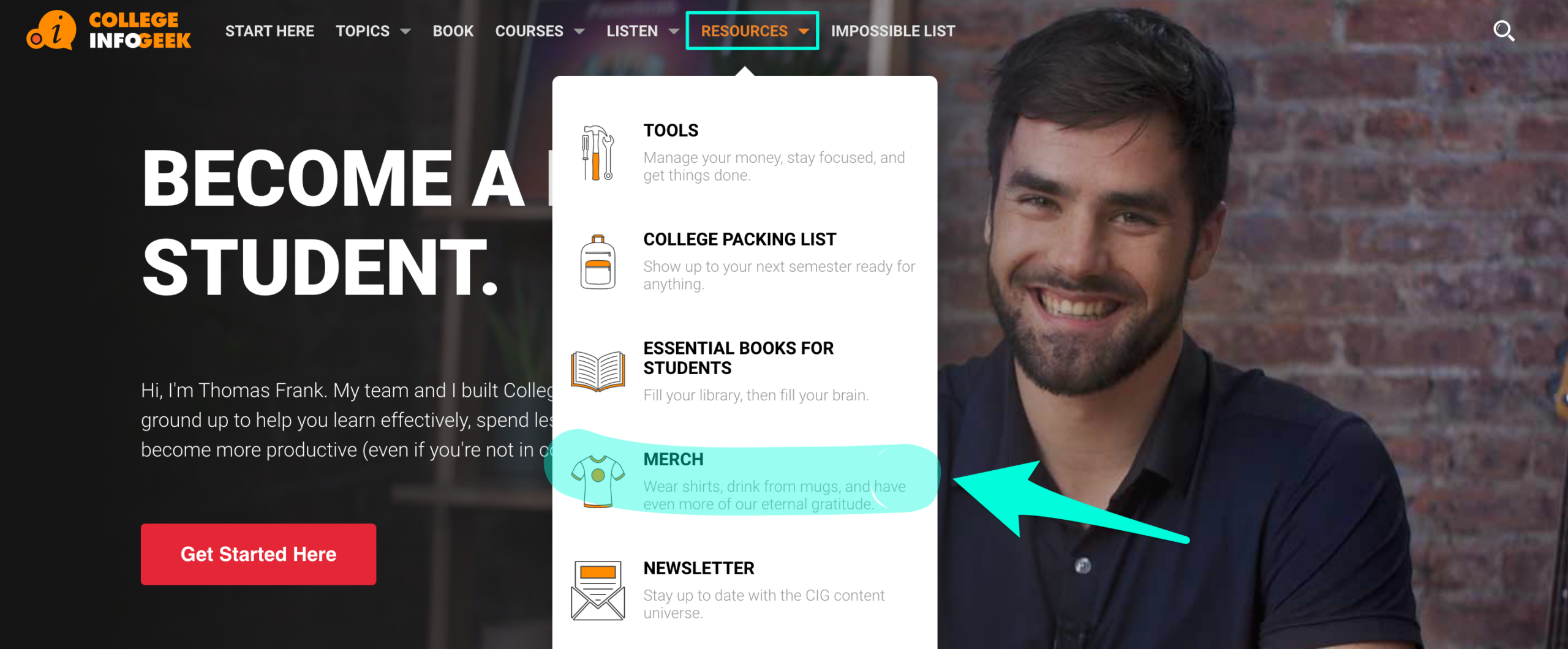
You can sell anything from branded pint glasses to stickers to coffee mugs to t-shirts.
Merch is rarely the primary revenue driver for content sites. It works better as brand reinforcement. Readers who buy a mug or sticker become walking advertisements for your site, which compounds awareness over time.
2Choosing The Best Monetization Method
If there is a one-size-fits-all answer to how to
It is easy to join most affiliate networks, it is usually free to do so, and it is a good way to start making
But most of the other methods are not a fit for everyone.
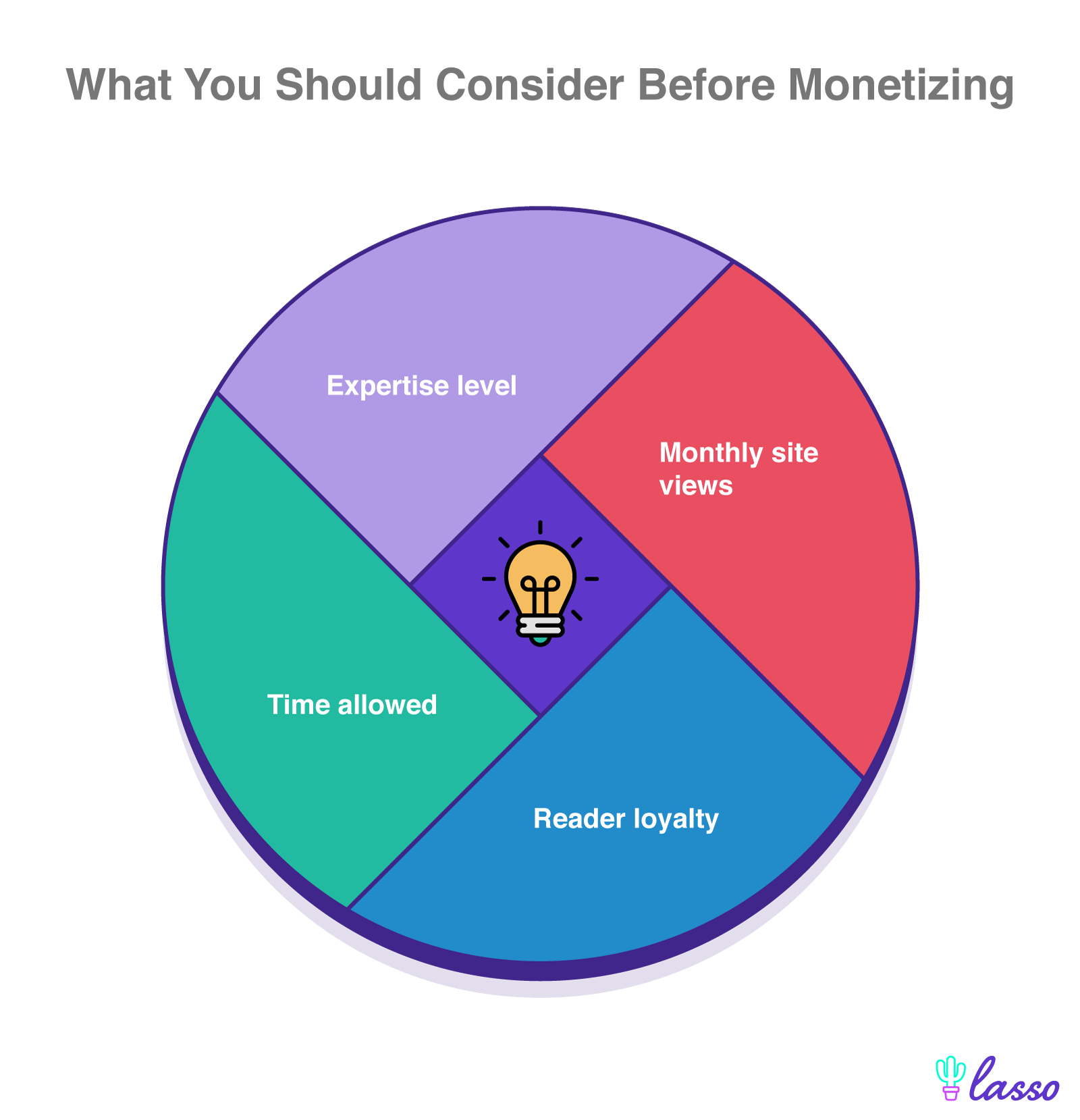
While it is a good idea to try a few different approaches, you do not want to spend time and effort setting up something that is not suitable for you.
These are some things to consider when choosing monetization methods:
-
The number of monthly site views
-
How loyal your readers are
-
How much time you have to create products or content
-
Your expertise level in your site’s subject
If you get less than 200,000 page views per month, you probably cannot sell ad space directly through premium networks, but you might still make
Have a loyal audience? They might be willing to pay for premium content or donate to your site. If you are still working a full-time job, you may not have time to write an ebook or create a course.
Do you have a lot of experience in your subject? You might do well by offering consulting services or hosting webinars. Do not get discouraged if your site is not making
Like any business, growing a website that makes
-
Personal finance
-
Pool and hot tub care
-
Homebrewing
-
Coffee (sold the website for a profit)
The implication is clear. Diversification matters. Most successful operators we know run at least two monetization methods simultaneously. Affiliate marketing for baseline revenue, owned products or consulting for margin, and display ads once traffic justifies the tradeoff.
For common revenue leaks to watch for, read 9 costly affiliate marketing mistakes to avoid.
3Using Lasso To Boost Your Website’s Revenue
Lasso lets you promote products on your site using custom displays, adding a visually appealing layer to your content. Its founders built this WordPress plugin out of necessity to run and manage their affiliate sites.
But it is not only for affiliates. It is a link manager that monitors every URL across your site, even links for products you sell.
We have found the more product information you give your website visitors, the more likely they will click when it is presented in an attractive box.
This one strategy improves your website visitor’s “click confidence.”
Instead of using text-only links, give them something more enticing. Here is an example of a single product display using Lasso.

4.8
WordPress comes out ahead thanks to unlimited flexibility, powerful themes, and awesome plugins (like
) available through the community. There’s a bit of a learning curve for new WordPress users but the platform’s raw power more than makes up for it.
-
eCommerce & SEO-friendly
-
Flexible hosting options
-
Extensive template library
-
Lacks “official” customer support team
You can choose which elements to add to your displays, including:
-
Trust badges
-
Star ratings
-
Pros and cons
Further Reading:
-
Give Your Readers More Options with Primary and Secondary CTA Buttons
-
How and Why Badges Make Your Products More Clickable
You can choose from multiple display options. To get started, click the Cactus icon displaying at the top of your WordPress menu bar:
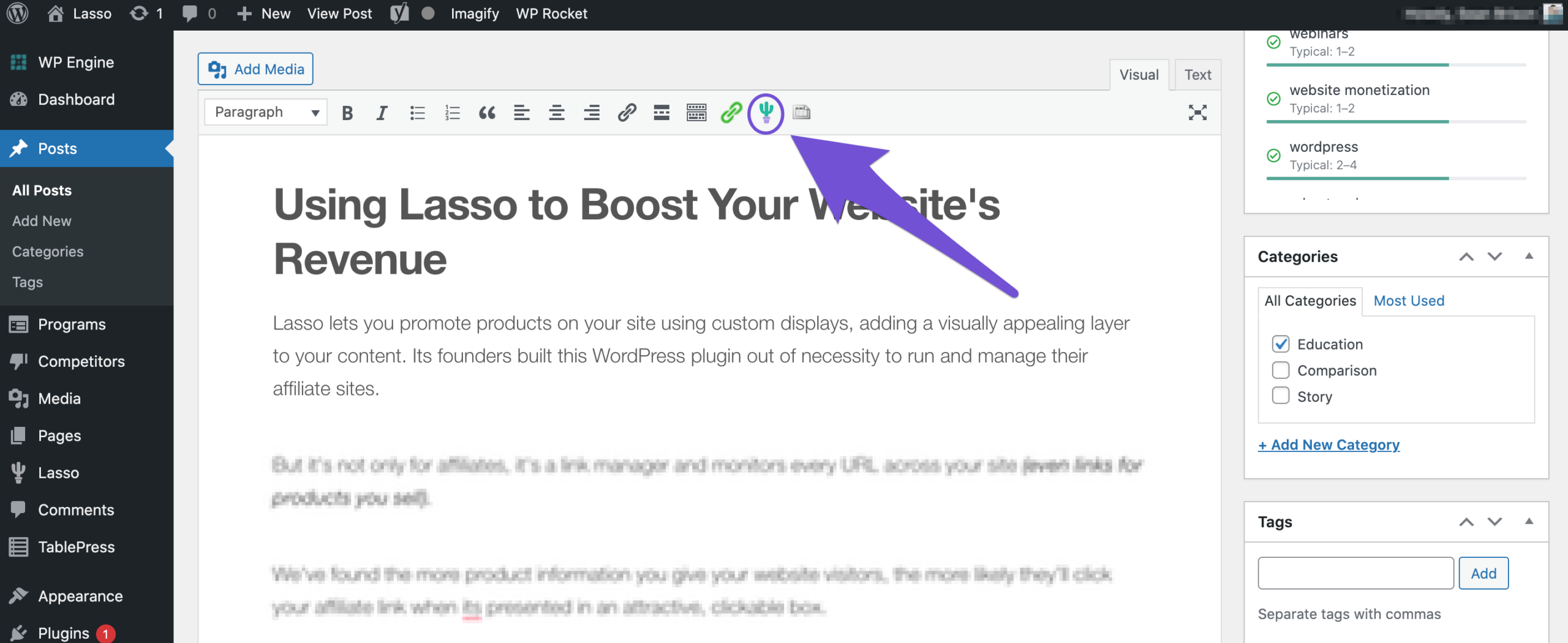
Then choose your display type.
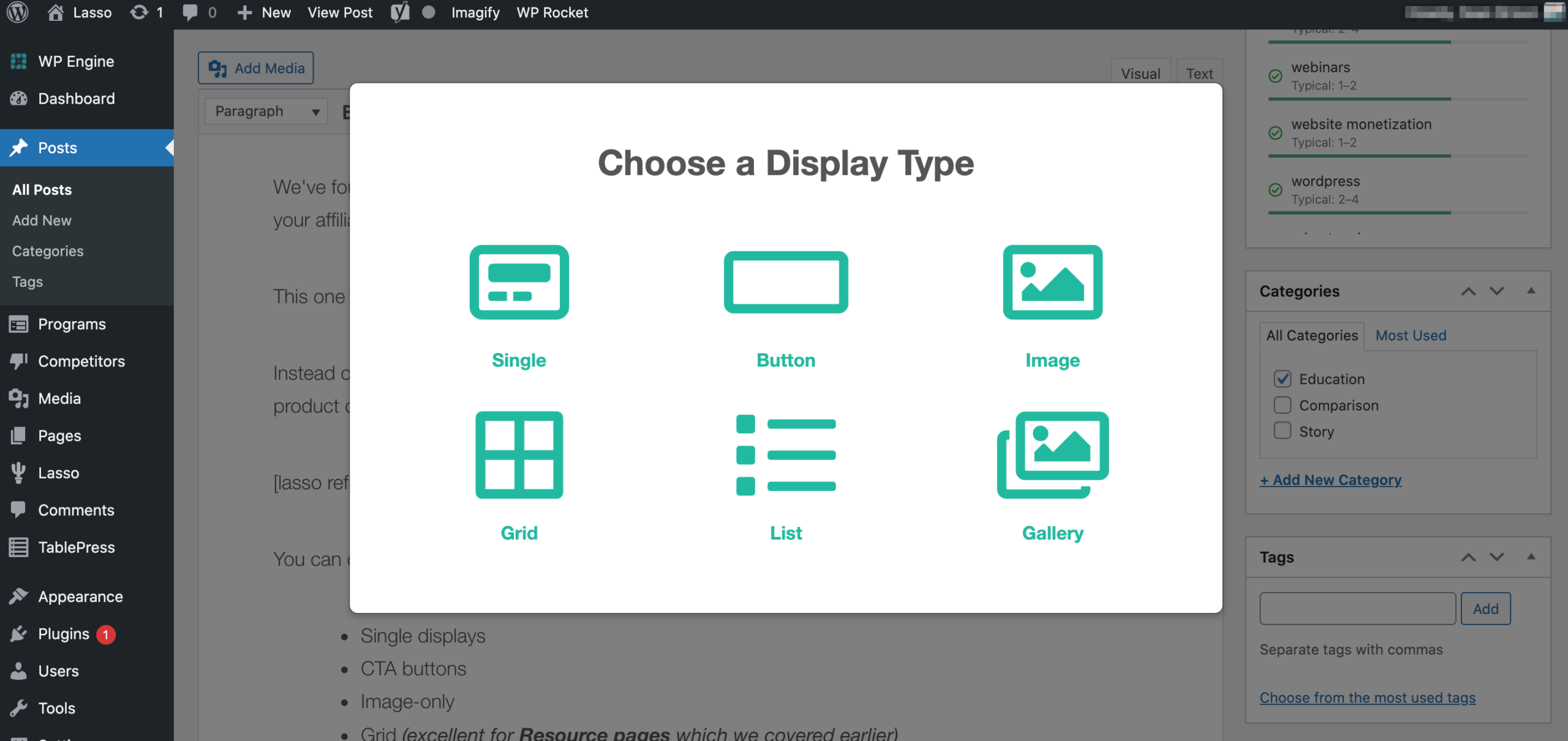
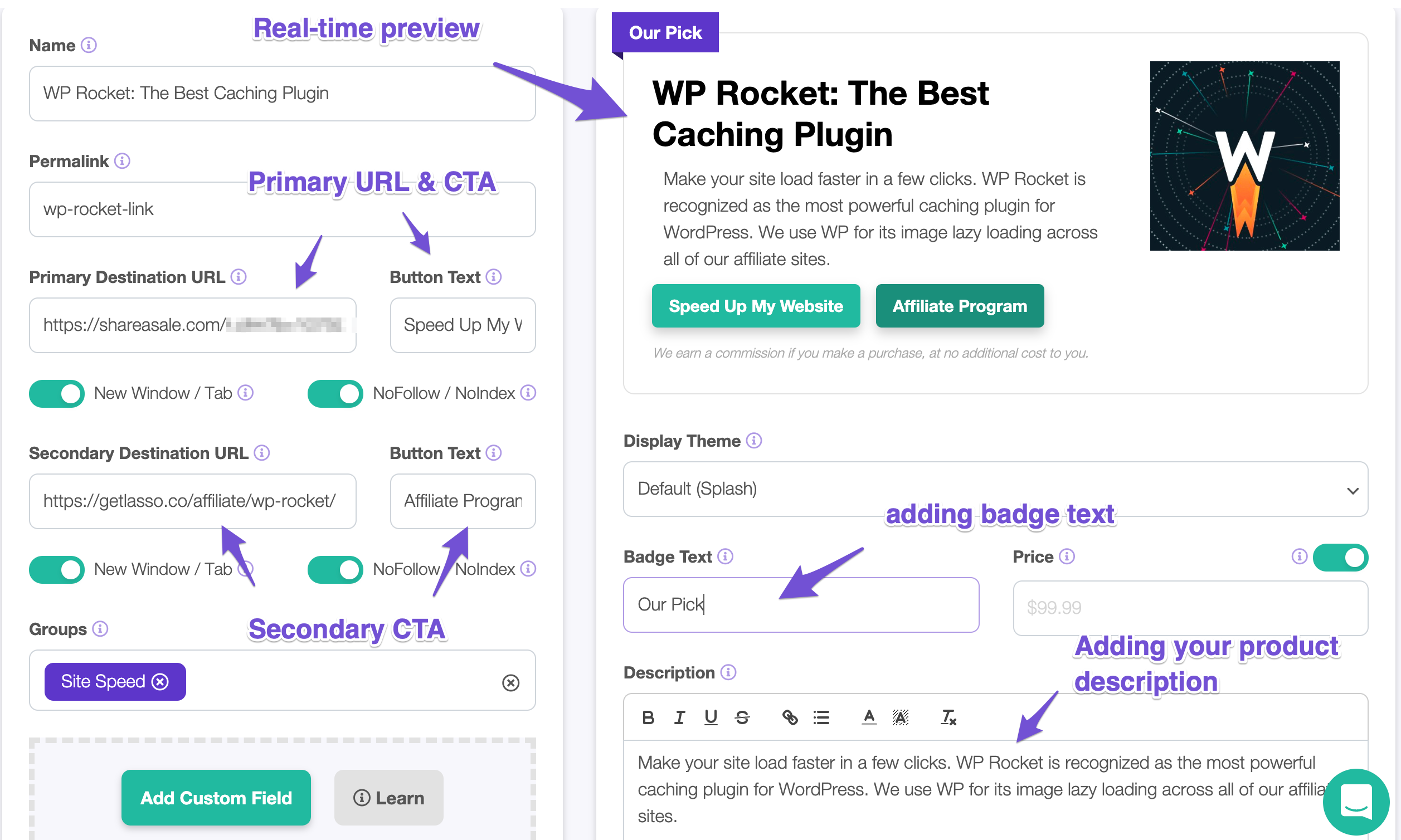
When building your displays, you will get a real-time preview as you add every component.
Further Reading:
- How You Can Use Lasso “Fields” for An Added Layer of Customization
If you have not already, scroll back up to section one and review our guidance on squeezing more revenue from existing content using Lasso’s Keywording Tool.
This is exactly what the Opportunities Scan is built for. It surfaces monetization gaps in content you already invested time creating. Fixing a broken link or adding a display to a page with 5,000 monthly visitors beats publishing a new post that gets 50 visitors for the first six months.
4Finding A Profitable Niche
We have written about this already, so we will not go into exhaustive detail here. But a few principles help you choose a niche that can actually support a business.
Ideally, you will find a topic that can make you
These are among the most profitable blog subjects:
-
Technology
-
Digital marketing
-
Finance and investing
-
Fashion
-
Travel
-
Personal development
The market shifted when search intent became the primary ranking signal. Niches with clear buying intent (reviews, comparisons, best-of lists)
Further Reading:
- How to Choose a Profitable Niche for Your Blog (+ 3-Step Validation Checklist)
Validate before you commit six months of writing. Check search volume, affiliate program availability, and whether existing sites in the niche are visibly monetizing. If you cannot find affiliate programs or ad networks active in a space, that is a signal worth taking seriously.
5Recommended SEO Tools
Creating high-quality content will only get you so far when it comes to the amount of traffic your site gets. Great content is a big part of monetizing a website, but your website traffic will not grow unless search engines are finding it.
Below, we have included some of the must-have tools we use daily to run our online businesses. SEO (search engine optimization) is the way to drive traffic to your site, and these tools can help.
Ahrefs
Ahrefs is an SEO keyword tool. It is the second biggest website crawler next to Google. Ahrefs’ Site Audit tool shows what parts of your website could be improved to help you rank higher.
The competitor analysis shows your competition’s backlinks, which you can use as jumping-off points for your content. You can also use Ahrefs to find the most linked content within your topic niche.
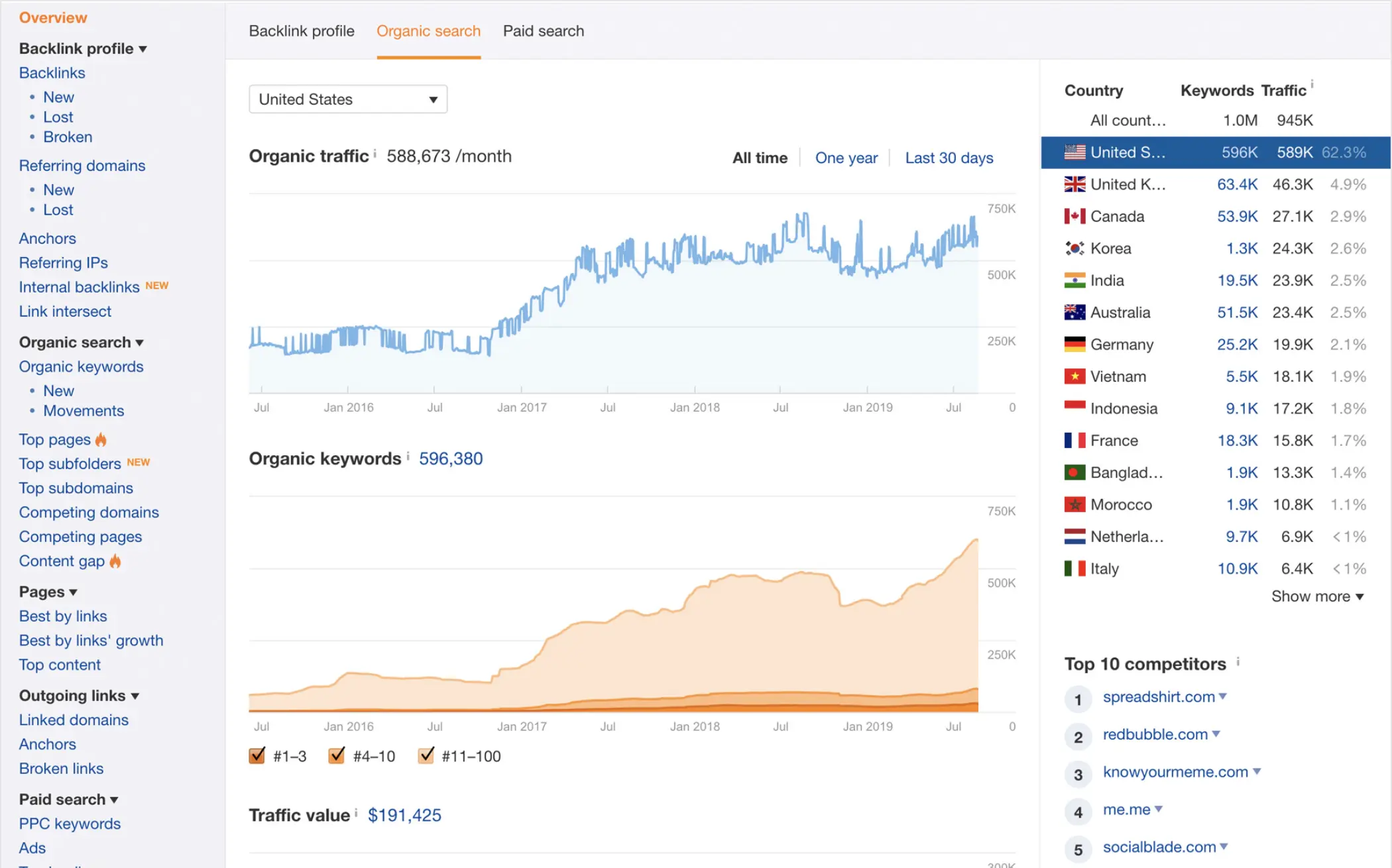
If you are not entirely sure what your niche should be yet, it might be worth investing in Ahrefs so you can research keywords before deciding. It might save you from choosing a niche that you will not be able to
Clearscope
Clearscope is a keyword research and content optimization tool. The main feature is the “Optimize” function. It provides a list of keywords that should be included in your content and gives you a letter grade based on how many appear.
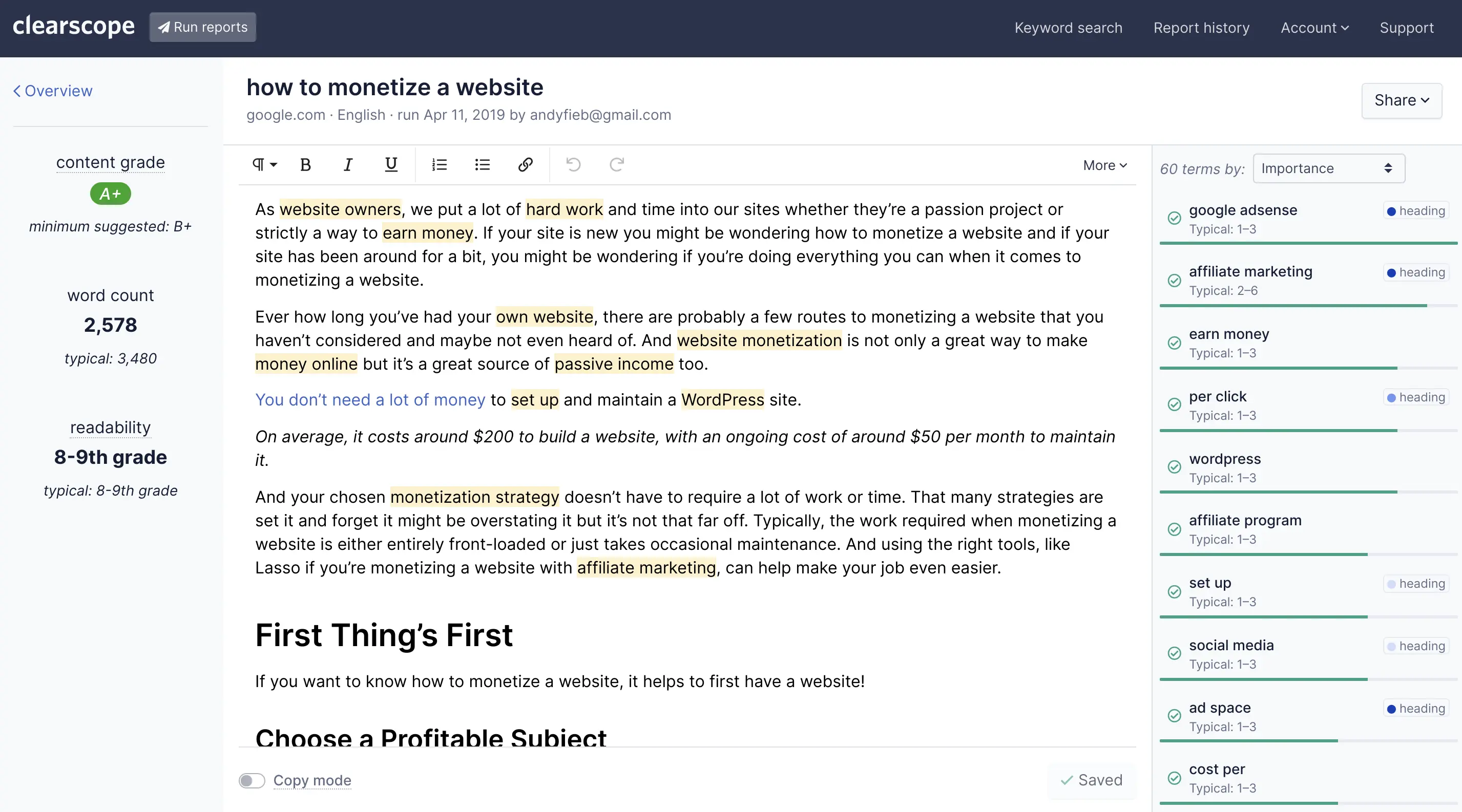
I use Clearscope for every article I write, and it is my favorite SEO tool.
Yoast SEO
Yoast is a WordPress plugin that helps your site with both its technical and on-page SEO. Simply put, it helps you create posts and pages that search engines can find.
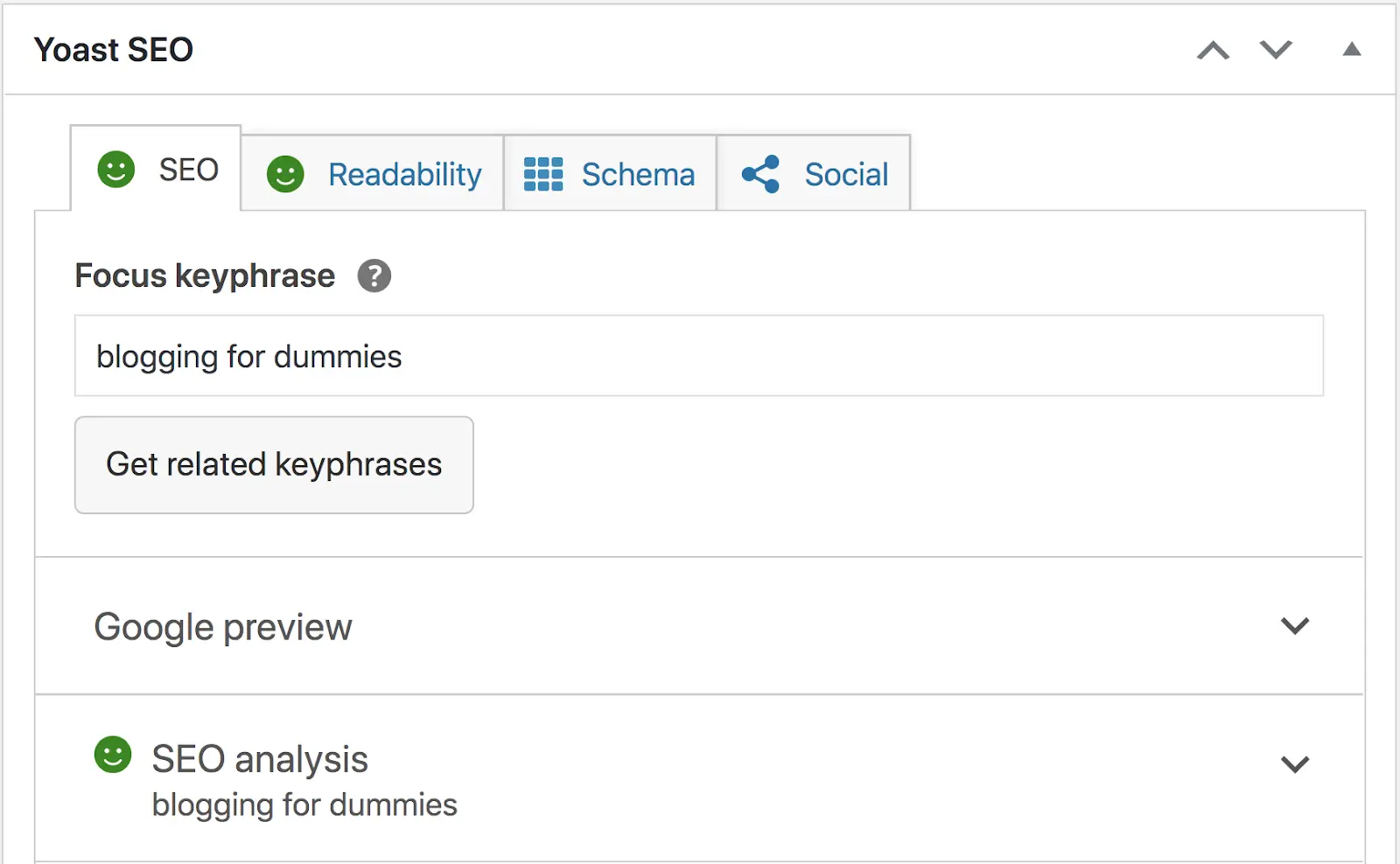
This is important because it is how people find you online. Making it easy for Google to locate your brand means getting it in front of the right people, which is better business.
That is why using an SEO plugin like Yoast or Rank Math is vital to your website’s success.
Further Reading:
- 31 Fantastic Affiliate Marketing Tools to Grow Your Business
6Last Words
You do not need a lot of
These prices fluctuate by host and tooling choices. But your chosen monetization strategy does not have to require heavy ongoing work. Typically, the required effort is either entirely front-loaded or takes occasional maintenance.
Having the right tools makes the job easier. At Lasso, we built the link infrastructure layer so you can focus on content instead of chasing broken URLs and missed monetization. See how Lasso fits your stack. Run an Opportunities Scan on the content you already have ranking.

Jamie I.F.
Jamie heads up marketing at Lasso, runs a portfolio of niche sites, and tweets a lot about affiliate marketing and SEO.