
Every publisher hits a wall eventually. You stare at a blinking cursor and cannot figure out what to write. Or you know exactly what to write, but one more article on the same topic makes you want to close the laptop.
I’ve been running affiliate sites for over nine years. At Lasso, I talk to bloggers every week. The same problems come up: niche selection, topic inspiration, motivation, monetization, traffic that never shows up.
This list comes from personal experience and customer feedback. Every issue below is within your control, and we will cover how to fix each one.
Updated 2026.
1Common Blogging Problems to Avoid
None of these problems are permanent. They are operational challenges. Treat them like a business owner would treat a broken funnel: diagnose, fix, move on.
1. Finding Your Niche and Picking a Direction
Picking a niche is the first hurdle every blogger faces. Nothing else on this list matters if you do not know what your site is about.
Here are a few strategies that work:
- Pick a topic you are so passionate about that you cannot not write about it.
- Look to see if other sites exist around the same topic. If they do, you are onto something. If no sites exist around your topic, there is usually a reason. Double-check that you are not being too specific or choosing a topic that is not marketable.
- Are there products you can recommend that will make you
money ? Make sure those products have affiliate programs.
Do not rush this process if your goal is to make a full-time income from your blog. If you are stuck, spend considerable time choosing your niche. For a full walkthrough once you pick a direction, see our blogging for dummies guide.
2. Inspiration and Finding Topics
Once you have picked your niche, you need to figure out which articles to write. This is one of my favorite problems because it is so easily fixable.
Plenty of sites have come before you. You can take inspiration from what they have written. Good artists copy. Great artists steal.
Make a list of all the sites you know and love in your niche.
If you cannot think of any, head to Google and search for “{your niche} site” or “best {buyable product}”. For example, “grilling site” or “best charcoal grill”. It is that easy.
Then hop over to Ahrefs and run your shortlist through Site Explorer. For each site, view their Top Pages. See a URL that looks interesting to you?
Hit the dropdown arrow beside it and click “Organic Keywords.”
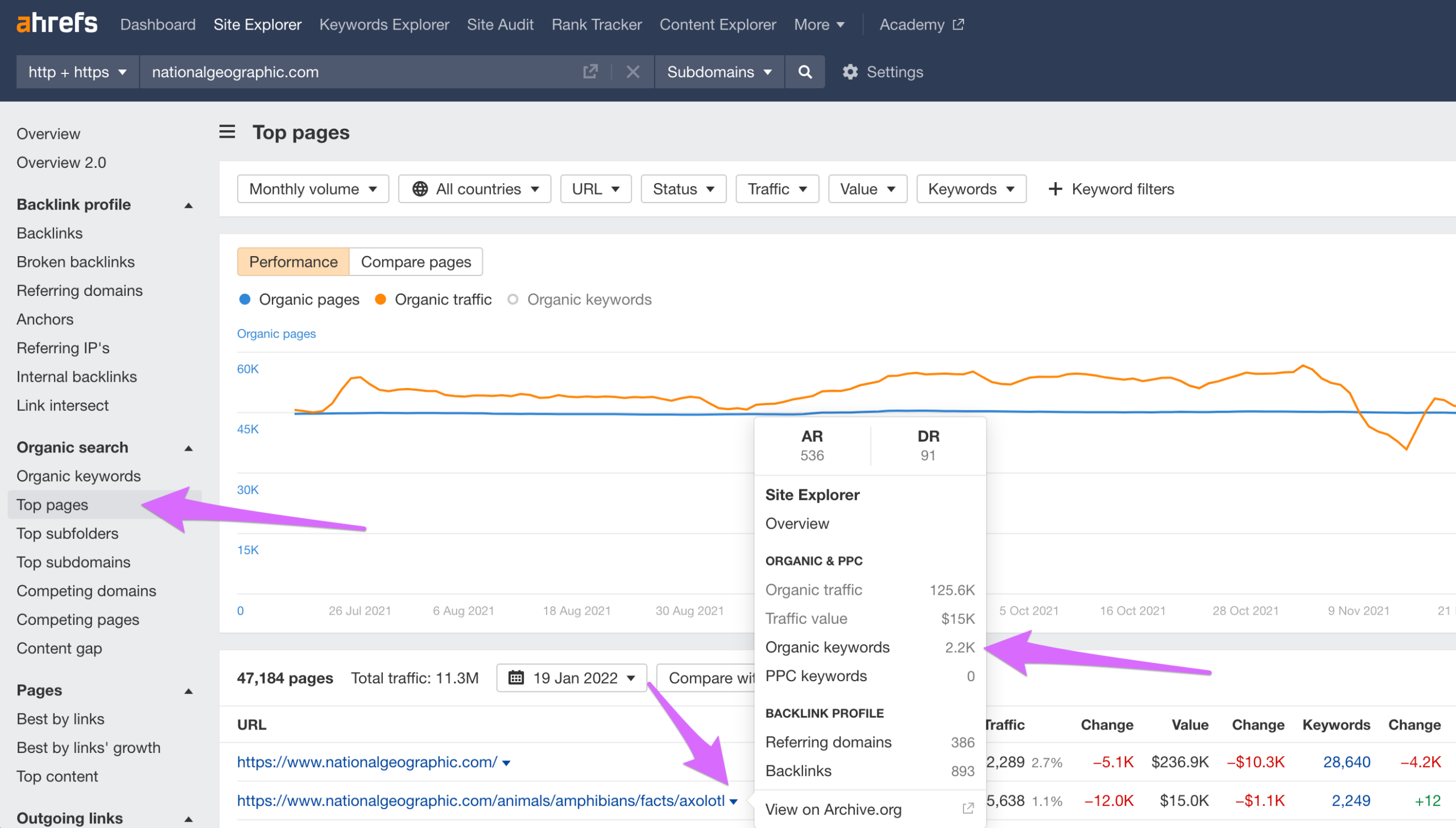
Anything with a Keyword Difficulty (KD) below 20 is a good bet. You can also type those keywords right into Google. The results will show you more URLs to use for inspiration.
Tip: If you do not have Ahrefs, consider a free research tool like Google Keyword Planner.
When you need a bigger list of angles, our 52 blog post ideas guide covers formats that work in almost any niche.
3. Motivation and Posting Frequently
Hopefully you have spent hours brainstorming article ideas and have a never-ending list of topics. Now you have to write them regularly.
This blogging problem is the hardest because everyone’s approach is different. There is no shortcut. You just have to do it.
Steps to jumpstart motivation and content creation:
- Replace “motivation” with “stubborn determination.” You may not be motivated to write today, but you can be determined.
- Block off a set time every day to write. Whether it is 30 minutes or 3 hours, make sure you are prioritizing it.
- Talk loudly about your goals. Tell your significant other, parents, or cat about how much you will post this year. Ask them to hold you accountable (except for the cat).
- Identify and refer to yourself as a blogger. Yes, this even applies to your LinkedIn page because you are a blogger. Every time you publish an article, you are working toward that identity and making it a reality.
- Write different types of content. Write a mix of lists, reviews, how-tos, and opinion pieces to keep the inspiration going. Monotony breeds boredom.
- Make the act of writing as easy as possible. Before bed, close every tab except a blank Google Doc. Type a title or first sentence. When you wake up, all you have to do is continue.
James Clear’s Atomic Habits inspired many of these recommendations. I highly recommend it for building good practices.
4. Monetization (aka Making Money )
Whether you are already monetizing or just learning about affiliate marketing, making
Affiliate Marketing
With affiliate marketing, you recommend another company’s products for a commission. It does not take the Herculean effort of creating your own products.
Whether you are a beginner or need to
Here is an example:
Lasso: The All-In-One WordPress Plugin for Affiliate Marketing
A WordPress plugin that lets you add, manage, and display your affiliate links from any program, including Amazon. Increase conversions. Find new affiliate link opportunities. Earn more revenue! Less than 5 minutes to set up.

Say goodbye to bulky, distracting ads. Say hello to sleek, relevant recommendations.
You can also use Keyword Opportunities to search for any word or phrase on your site and flip a toggle to turn matching text into a monetized link.
Run an Opportunities Scan on content you already published. Most operators find product mentions sitting unmonetized in posts that already rank. Fixing those placements is often the fastest path to higher earnings.
For common revenue leaks to watch for, read 9 costly affiliate marketing mistakes to avoid.
Display Ads
These are pop-ups and sidebar banners that are relevant to your topic.
It is easy to start with Google Adsense, and you can automate the process. However, it is difficult for newbie bloggers to earn meaningful income from ads because you need heavy traffic volume.
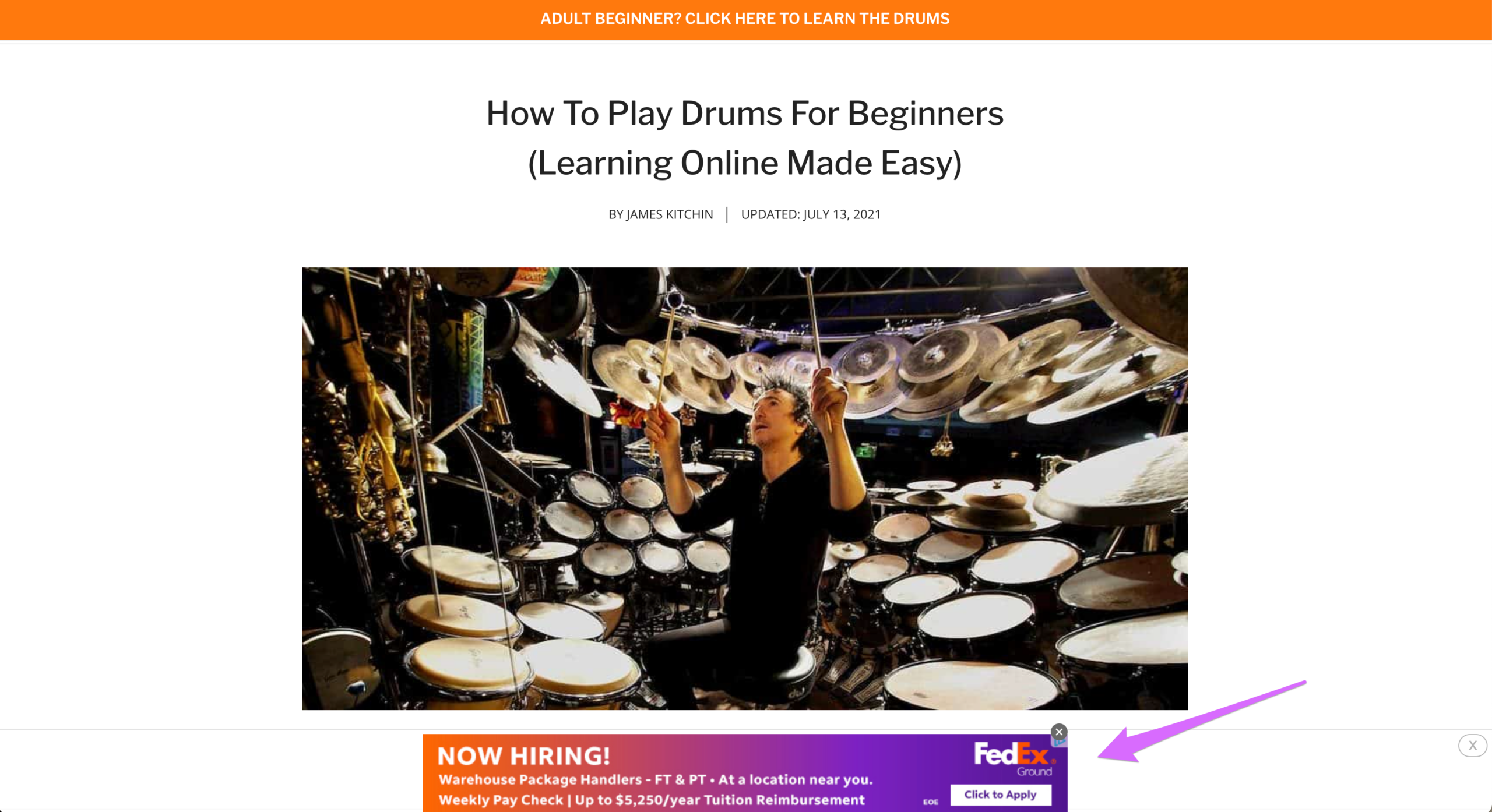
It is also important to note that display ads can slow down your site, and readers can easily avoid them with ad blockers.
You will want to diversify with other income strategies if you go this route. You should diversify regardless of your monetization strategy, anyway.
Selling Your Own Products
You can go full eCommerce and create an entire store, or create a few high-value items like ebooks and online courses. In the art niche, that might mean selling supplies, an ebook on charcoal drawing, or a course on painting techniques.
You will keep the majority of every sale, but research fees before you go live.
5. Treating Your Blog Like a Business
You have to treat your hobby like a business if you want to get paid for your hobby later.
Or, as I like to say, “Work like nobody else now, so you can live like nobody else in the future.”
Being business-minded does not mean you have to be devious or dull. It just means you need to be thoughtful.
Tips to turn your personal blog into a business:
- Write with a business mindset. Consider monetizing and positioning your article in the SERPs before writing it.
- Open a business bank account. When your blog makes
money , it should feed into this account. Likewise, all your subscriptions and writing expenses should also come out of this account. - Track income and expenses. This should tie closely to your bank account. You can use free software like Google Sheets to keep a simple spreadsheet of how much you make and spend. This will also make tax time much, much more manageable.
- Make a publishing schedule. Make a plan and stick to it. Are you going to write one article per week? What specific articles are you going to write for the next six months?
- Build a team. As your business grows, you will need to outsource. What functions will you outsource, and in what order? Are you going to pay freelance writers or virtual assistants? Calculate how much you earn per article and determine a reasonable rate to pay them.
All that aside, take a deep breath and enjoy yourself.
Take that walk. Play that game. Or write that post that will not make you any
6. Staying Focused
If you are having trouble staying focused, I do not blame you. I watched a Thomas Frank video on intense focus while writing this because I was not focused. It happens.
Do not obsess over losing focus. Recognize when it happens, then actively work toward finding it again.
A good strategy for this is the Pomodoro Technique. Essentially, reserve 25-minute time frames for distraction-free work.
For those 25 minutes, it is just you and whatever you use to write. Then you take a 5-minute break. After that, you are back to the next 25-minute task.
How to stay focused:
- Control the noise around you. Put on music that helps you concentrate, or put on noise-canceling headphones.
- Get everything that is going to distract you out of the way. Let the dog out, go to the bathroom, check social media, and do whatever you need to do.
- Outline what you are going to write before you write your blog post. It is much easier working from something than nothing.
- Be open and honest that you need time to focus. It is 100% okay to ask people for space and time.
Also, take care of yourself. Rest, hydrate, and do the basics. Your brain performs better when you do.
7. Growing Traffic and Ranking in the SERPs
You spent all that time perfecting your blog’s content, but nobody is reading it or finding it in search engines. Not having blog traffic is such a heartbreaking blogging problem.
There is a bit of a dark art to getting organic traffic. The more you practice, the better you will get.
Step 1: Google the keyword you are considering, then read competing articles. What are they doing well, what is missing, and how can you improve it? Can you take a contrarian approach to position your post against the existing articles?
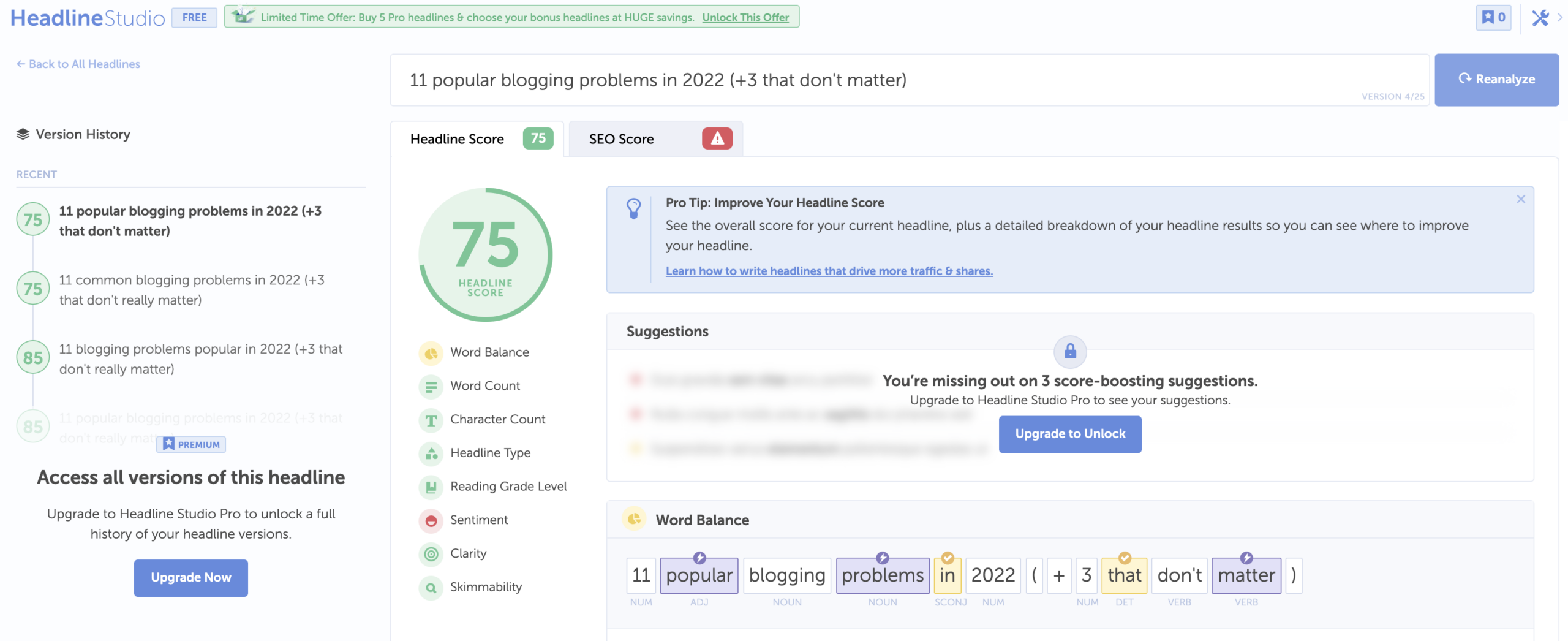
Step 2: Optimize your titles using headline analyzers like Headline Studio by CoSchedule. This way, you will stand out in the SERPs.
Step 3: Once you get that click on Google, make sure you do not give the reader a reason to bounce. Write 1,800+ word articles when you can. Master internal and external links. Run your article through Grammarly to reduce distracting errors.
Takeaway: Get good. You have to be slightly delusional about being the best. Be ruthless and ensure that every post you write is better than what is already out there.
8. Engaging Your Audience
Engaging your audience goes hand-in-hand with ranking in search engines. After all, you cannot have traffic without readers.
But how do you get your audience’s attention?
Make sure you write selfishly from the reader’s point of view. Obsess over your intro to get their attention immediately, or they will hit that back button in seconds.
This is a massive, screaming warning to Google that your post is either not good or irrelevant to that keyword.
Ask yourself, “What is the reader searching for with that keyword?”
Answer that question in your first subheading, then move to the logical next step. Keep writing in detail until you have hit a reasonable conclusion.
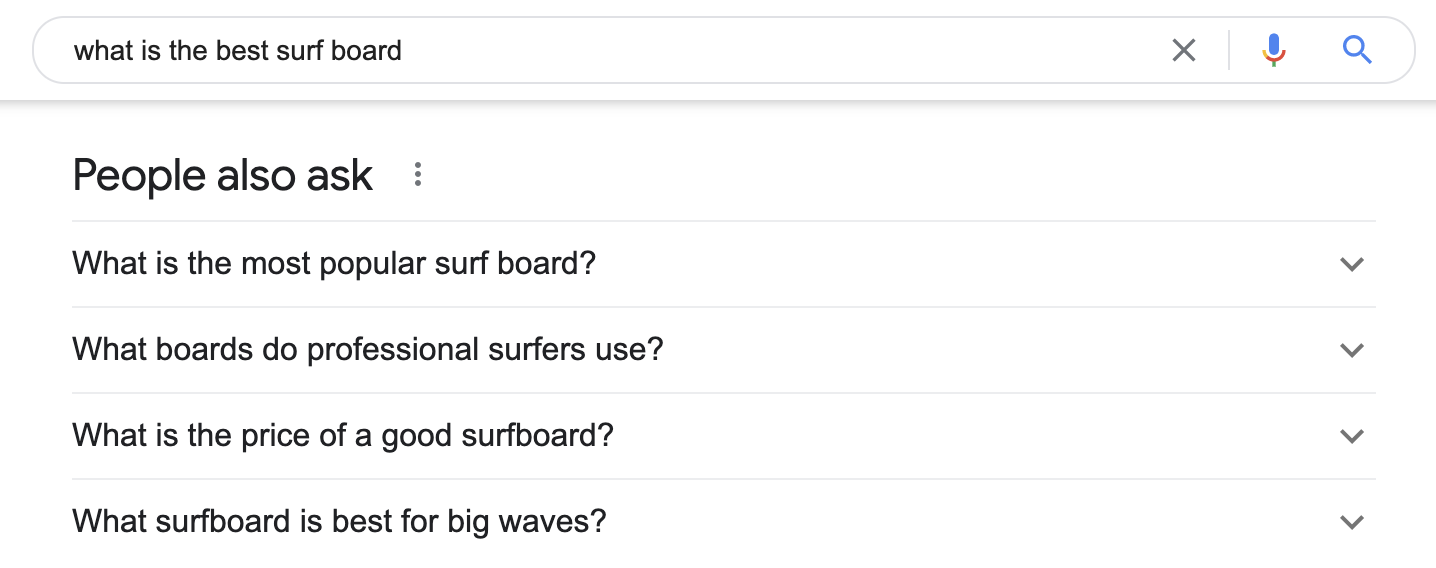
Then look at your competing articles and Google’s “People Also Ask” to see if you missed anything.
Also, spice up your content both on the micro and macro levels.
Add call-outs, Displays, tips, and useful images to reduce bounce rates and boost clicks. Read your post start to finish, then skim for huge blocks of text.
9. Budget (or Lack Thereof)
It is no secret that a new blog will be strapped for cash.
You will put in a lot of hours without seeing a return. It is one of the biggest blogging problems I see with our customers.
The flip side is that you can run a quality WordPress blog with very little overhead. If you are strapped for cash, you can start affiliate marketing with just $3.
Keep things simple and focus on creating content if you are new to this. There are tons of flashy plugins and pro tools that you will want to try. Gradually scale up your spending once you are consistently getting enough traffic.
Once you see consistent traffic and commissions, do not shy away from premium tools just because of the price tag.
The cheapest Ahrefs plan is $99/month, but it is the go-to SEO resource for a reason. Lasso is $33/month, but it will save you countless hours of hard work and earn you more than the cost of admission.
Once you can afford premium tools, you will be closer to scaling your business to the point where $99/month feels like pocket change.
10. Keeping Your Site and Content Up to Date
You may not have felt this if your blog is new, but a severe blogging problem is when your site gets hit from all angles.
Sometimes, Google changes its mind and releases a new update. Other times that link you referenced two months ago is broken, and that Amazon product you linked to 12 times is now out of stock.
Keeping up is nearly impossible if you are doing this all by yourself. That is why tools like Lasso can save time and spare your sanity.
When Google released its link spam update in July 2021, it asked sites to qualify affiliate links with rel=”sponsored”. We built that support and made it retroactive so customers could update existing links quickly.
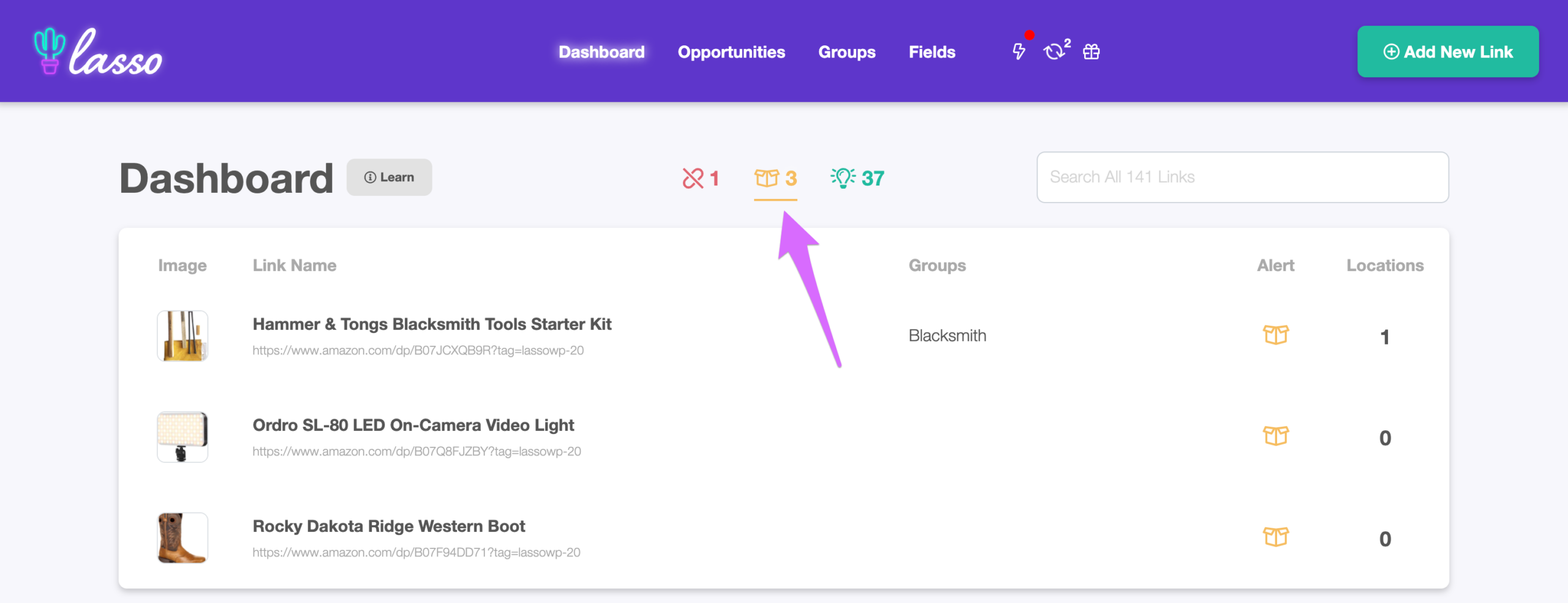
Lasso also scans your site daily for broken links and out-of-stock Amazon products. Click the notification icon, swap the old link, and Lasso updates it site-wide.
11. Time Management
How do you overcome all the blogging problems on this list and still eat and sleep?
You have to prioritize, and you have to be intentional. Tools like Todoist and Notion are great ways to track, schedule, and document what you need to do.
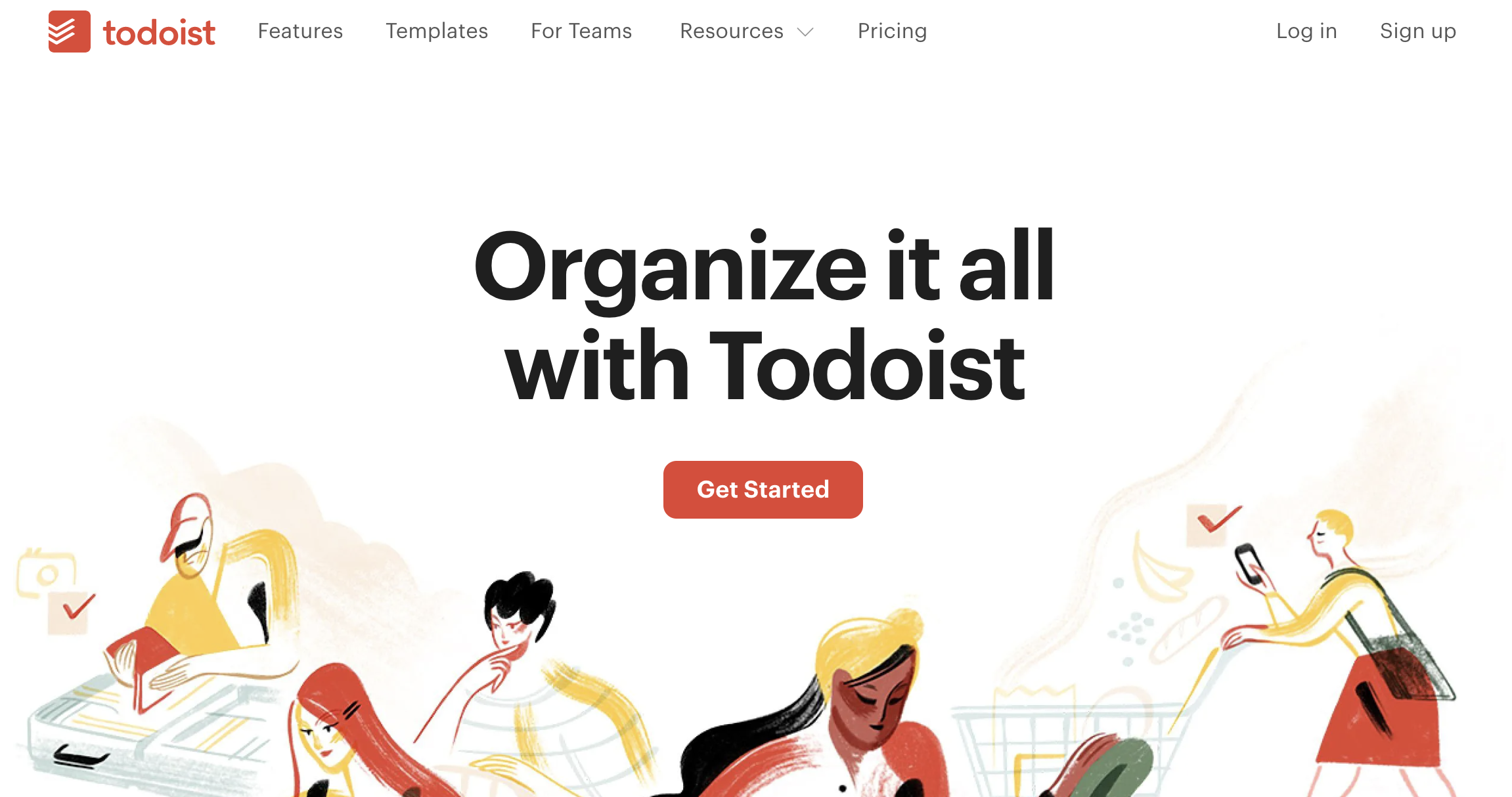
If you have not used Todoist before, start there.
Think of it like a grocery list or a supercharged to-do list. You can type something like “draft blogging problems outline tomorrow,” and Todoist automatically puts that on your schedule for the next day.
It is super easy to use, it is free, and it means you do not have to remember everything on your list.

Next, put every process and thought into a tool like Notion.
This way, you only have to figure it out the first time. Then if you take a break and need to remember your writing checklist, it is right there.
Bonus: When you hire team members, you will already have documentation and templates ready.
Additionally, audit your workweek.
Make a list of everything you do and track three things: Is it beneficial? Can it be done only by you? Can it be automated?
If it is not helpful, remove it. If someone else can do it, outsource it when you can. If it is able to be automated, prioritize getting it automated. You will save so. Much. Time.
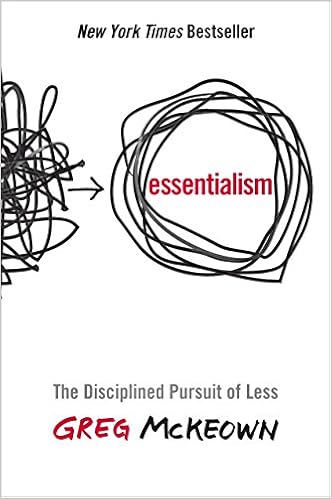
As the last step, make time to read Essentialism. This book will show you what is important, how to work less, and how to say no to things that are not worth your time.
Essentialism: The Disciplined Pursuit of Less
$29.00
$11.75
The Way of the Essentialist isn’t about getting more done in less time. It’s not about getting less done. It’s about getting only the right things done. It’s about the pursuit of the right thing, in the right way, at the right time.
-
Will make you more effective.
-
Quick read and highly actionable.
-
You have to be open-minded.
We earn a commission if you make a purchase, at no additional cost to you.
2Blogging Problems That Are Not Really Problems (and How to Overcome Them Anyway)
While chatting with affiliate marketers, I have noticed the tendency to focus on things that do not matter.
It is understandable, but do a service to yourself and spend as little time on these as you can. They do not get results.
No Comments and No Feedback
No one will give two hoots about what you are building until you are already successful.
Even then, the vast majority of people will not care. So you need to make peace with this and stop looking at your comments section.
The good news is that people who do not care about you are not your audience and do not deserve your time.
Eventually, your readership will find you if you are writing great content planned with tons of research. Write for your audience even if they have not found you yet.
When people finally find you, treat them like royalty.
Ask what they would like to see more of and how they discovered you. Any insights they have are worth their weight in gold. Then make sure they subscribe to your email newsletter, so they keep reading your posts.
While waiting for comments, put sticky notes on your bathroom mirror with affirmations. Is it cheesy? Yes, but my husband and I both do this, and it works.
Design
I will confess: I am the worst at this. I want everything to look nice, and I can spend hours working on layout customizations. Unfortunately, when I do this, I am distracting myself from the actual work.
The solution?
Pick a fast WordPress theme, make the minimally viable customizations, then focus on writing. As much as it sucks, no one will care what your header or footer looks like if they cannot find your site in the first place.
Tip: A good rule of thumb is if you cannot decide between two options, chances are it does not make a difference.
Any design choices should be obvious, or you should pick something and move on.
Save layout optimization for when you are already making considerable cash with steady traffic. Until then, pick something that looks not bad and move on.
Link Building and Getting Backlinks
I get it. Backlinks are essential for SEO, and more backlinks bring better rankings in the SERPS.
However, there is no good way to play the system here. Buying links means spending
And if you are at the stage where you are considering buying links, your blog probably is not making enough
Reaching out for guest posts and link swaps is also exhausting. If you are good at it, you risk diluting your content.
You are better off spending your time and
As your blog grows, you will also get a sickening amount of guest blogging and link swap emails. Look for good options there, then delete the rest.
“I Can’t”…
If your problem starts with “I can’t,” it is not a problem.
There are exceptions to this. But for the most part, “I can’t” means “I won’t.” Also, “I can’t” is super negative thinking. Instead, practice positive self-thought and reword issues into something you can control.
What incentive do you have to try if you are telling yourself you cannot do it?
If you have made it this far and still feel like you cannot do XYZ, that is okay. However, you need to accept the limitations this causes and decide if your blog is a priority.
Whatever you decide, I still love you.
3Blogging Problems Are Figure-Out-Able
If you are having any blogging problems right now, I promise you are not alone.
I have seen too many customers churn because they close their sites, and it breaks my heart every time. Many of our customers also are not running lucrative businesses (yet) and need someone to tell them to keep going.
So this is me encouraging you to keep going.
Anyone can run a blog, but there is a reason everyone does not. Stick with it longer than everyone else, and treat your blog like a business. Then kick back and take a vacation funded by your site’s affiliate commissions.
At Lasso, we built the link infrastructure layer so you can focus on content instead of chasing broken URLs and missed monetization. Start optimizing your links today. Get started with Lasso and join our newsletter, The Monday Marketer, for weekly operator insights.

Caitlin Ward
Caitlin Ward is a wife, dog mom, and Head of Customer Success at Lasso. She has a B.A. in Business and loves using that knowledge to help bloggers earn full-time incomes online. She’s also mildly obsessed with cats.