
Writing about yourself is uncomfortable. I get it. Drafting a dating profile is pure torture for most people, and a blog bio hits the same nerve. But if you publish content for a living, your bio is infrastructure. It is the first thing a reader, a brand partner, or a potential client sees when they decide whether you are worth their time.
I’ve been running affiliate sites for over nine years, and one pattern shows up everywhere. The operators who convert traffic into revenue treat their bio like a positioning statement, not an afterthought. You have a few lines to prove you are a credible authority in your niche. This guide shows you how to write a blog bio that earns trust before someone reads a single article.
You will learn why bios matter for monetization, the three components every effective bio needs, real examples from top publishers, common mistakes to avoid, and how to adapt one core bio across your site and social profiles.
Updated 2026.
1Why Blog Bios Are Important
When you run a blog, a podcast, or a social channel, you are a business owner whether you feel like one or not. You are trying to attract a target audience, win clients, or land brand partnerships. Your author bio is the handshake before the conversation starts.
For operators building at scale, the bio does more than introduce you. It filters the right readers in and sets expectations for what your content delivers. A vague bio attracts casual browsers. A sharp bio attracts people who will click affiliate links, join your email list, or hire you for services. That is the difference between traffic and revenue.
An author bio has to be succinct. It has to convey experience without reading like a resume. And it has to connect on a personal or professional level with the person on the other side of the screen. If you lose them in the first sentence, you may lose them as a reader, a listener, or a client forever.
The data tells a different story than most hobby bloggers assume. Bio quality rarely shows up in analytics dashboards. But we see it in downstream metrics. Sites with clear author positioning tend to hold attention longer on first visits and convert better on monetized pages. The bio is not decoration. It is part of your conversion stack.
If you are still treating your site like a side project, read our guide on how to turn a blog into a business. The bio is one of the first assets you build when you shift from writer to owner.
2How To Write A Blog Bio
Most bad bios fail for predictable reasons. They list credentials nobody asked for, use vague language, or talk about the author instead of the reader. Good bios follow a simple structure. Here is what works.
Tell Them Who You Are and What You Do
The first sentence of your blog bio should tell the reader who you are and what you do. Use your first and last name.
If you write in third person, your name should be the first two words of the first sentence. If you write in first person, your name comes right after “I’m.”
Whether you choose first or third person is a style call. I find third person slightly less awkward because it feels like describing someone else rather than bragging about myself. But plenty of strong operators use first person, especially on personal brands.
The rest of the first sentence should explain what you do with a little personality. You do not want it to sound like a LinkedIn headline from 2014.
Here are two first-sentence blog bio examples using a fictional food blogger, Pam Smith:
- Pam Smith is a food blogger who creates original recipes using seasonal ingredients.
That version identifies the blogger and tells us what she does. It is clear. It is also dry.
Let’s sharpen it:
- Pam Smith is an epicure who conjures original recipes using the very best of nature’s seasonal bounty.
Same information. More voice. More reason to keep reading.
Here is a strong real-world example from the food blog Deliciously Ella:
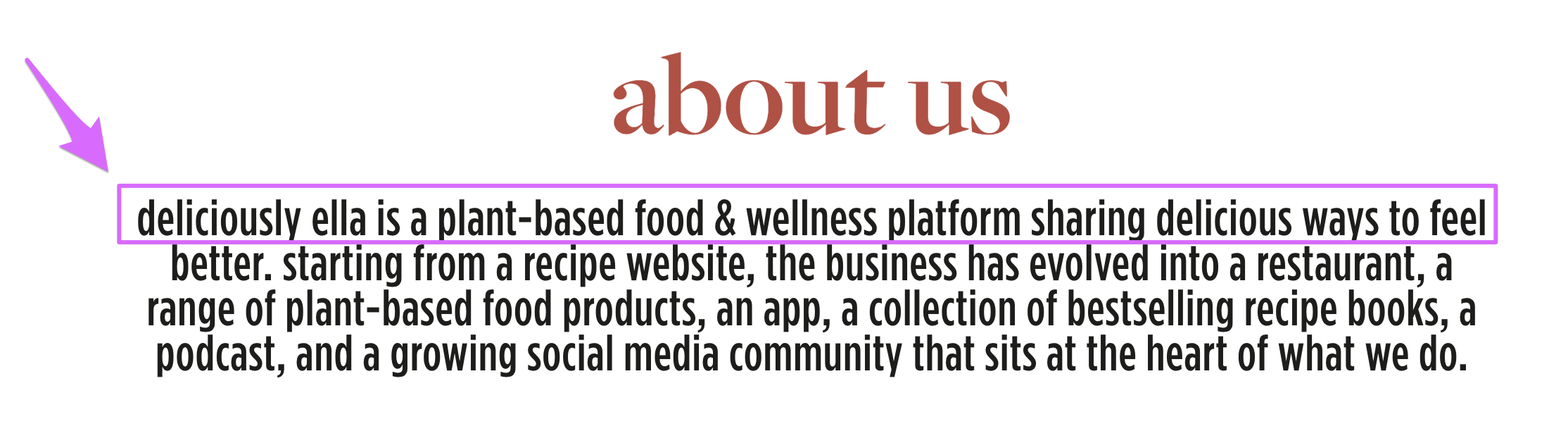
The first sentence tells you exactly what she does and who she serves. No confusion. No fluff.
For operators, this means your opening line should answer two questions in under fifteen words: who is this person, and what topic do they own?
Tell Your Audience What You Can Do for Them
Your blog is not really about you, even when it is about you. If you want to make
Let’s extend the Pam Smith example:
Pam’s recipes are bursting with flavor and nutrition, easy to follow, and quick to prepare for those who want to improve their diets but do not want to spend hours a day in the kitchen.
Even people who do not love cooking still do it to improve their health and save
It answers the reader’s question: what’s in it for me?
Takeaway: let your bio answer WIIFM before someone has to dig through your archives to figure it out.
This matters even more when your monetization model depends on trust. Affiliate revenue, sponsored content, and digital products all require the reader to believe you understand their problem. The bio is where that belief starts. For content formats that convert without feeling salesy, see our guide to high-converting affiliate marketing content.
Give Readers a Clear Next Step
You have introduced yourself. You have explained what you do for the reader. Now tell them where to go next.
This is not about baiting people with a free PDF or a lead magnet they will never open. It is about reducing friction. A strong closing line in your bio points readers toward the content, channel, or action that best serves them.
Examples that work without an opt-in pitch:
-
Explore Pam’s 20-minute weeknight dinners for busy parents who still want real food on the table.
-
Follow Pam on Instagram for seasonal recipe ideas you can shop for in one trip.
-
Read Pam’s guide to building a realistic grocery budget without giving up flavor.
The point is direction, not desperation. You are showing readers you understand their problem and you have already built the answer somewhere on your site or channel.
Good CTA copy on buttons follows the same principle. It tells people what to do and what they get:

Apply that logic to your bio’s closing sentence. One clear path beats three vague options.
If you publish with a team or outsource drafts, your bio should still sound like one voice. Our guide on how to write a content brief helps keep author positioning consistent across contributors.
Put It All Together
You now have three components for an effective blog bio: who you are and what you do, what you can do for your audience, and a clear next step for the reader.
Here is the full Pam Smith example without the free-meal-plan opt-in the old version used:
Pam Smith is an epicure who conjures original recipes using the very best of nature’s seasonal bounty. Pam’s recipes are bursting with flavor and nutrition, easy to follow, and quick to prepare for those who want to improve their diets but do not want to spend hours a day in the kitchen. Explore her 20-minute weeknight collection for meals that taste like you tried, even when you did not.
Three sentences. Name, value, direction. That is the template.
3Blog Bio Examples
Ernest Hemingway once said about writing, “All you have to do is write one true sentence. Write the truest sentence that you know.”
Hemingway’s style was short and punchy. Channel that energy when you write your blog bio. One true sentence about who you help and how is harder than it sounds. That is the point.
Good writing is not easy or simple. Summing yourself up in a few lines takes real work. Here are templates and real examples you can learn from.
Freelance and Professional Bios
“Pam Smith is a freelance copywriter who specializes in personal finance. She can make a dull subject interesting while teaching people how to control and improve their finances. Follow Pam on Twitter @PamSmith for daily financial tips, tricks, and tactics.”
Here is one from conversion copywriter Kira Hug’s website:
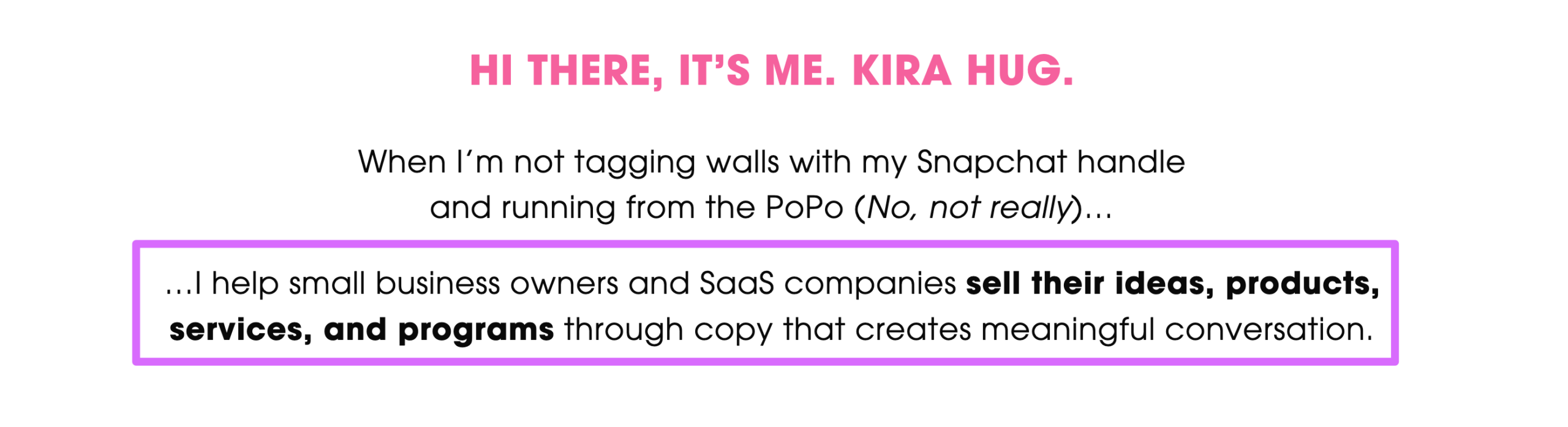
She lays out what she can do for you from the first line. No warm-up paragraph. No credential dump. Just value.
Lifestyle and Personal Brand Bios
“Hi, I’m Pam Smith, and I write about fashion, food, beauty, and wellness. I love to share the finds, tips, and tricks I’ve discovered to make life more beautiful and fun. Follow me on Instagram for the latest finds that I love and that you will love too.”
First person works well here because the brand is the person. The tone matches the niche.
Travel and Niche Authority Bios
“Pam Smith is a travel blogger who will show you how to travel on a small budget. Having traveled to more than 75 countries in the past decade, Pam wants to help aspiring travelers achieve their own travel dreams. Start with her budget planning guide for your next trip.”
Here is an example from Expert Vagabond:
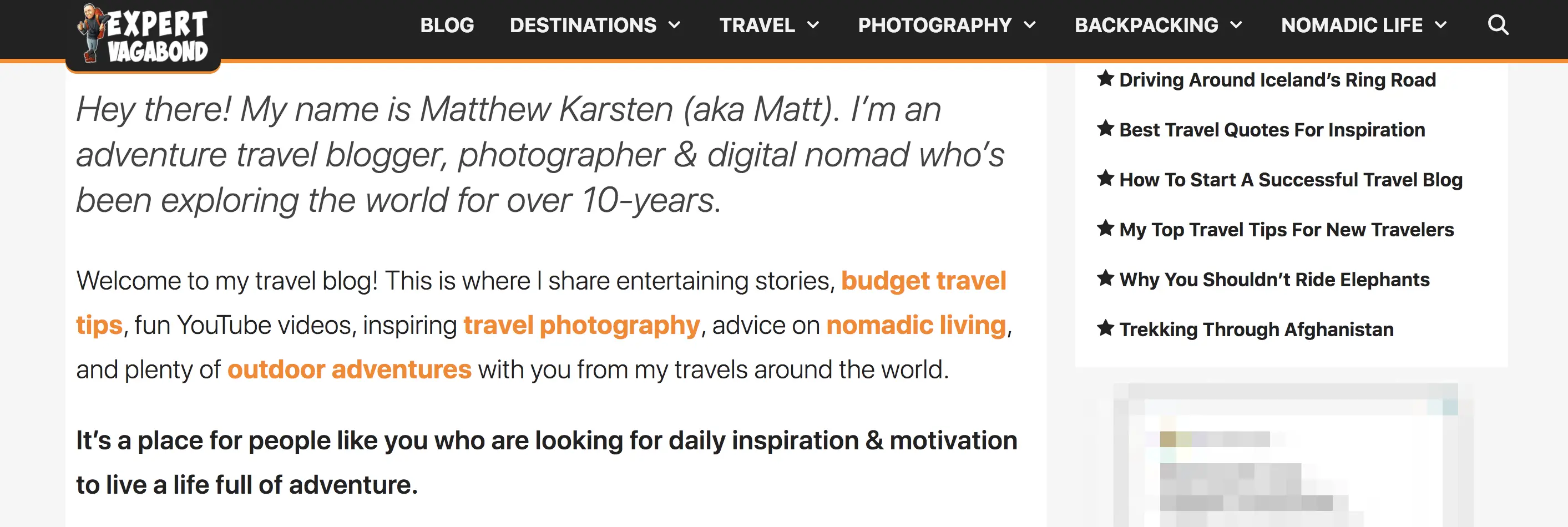
Notice how the bio combines credibility (countries visited) with a clear promise (help you travel on a budget). The reader knows what they are signing up for.
News and Expert Commentary Bios
“Pam Smith spent fifteen years as a political reporter for XYZ Newspaper and has written for Forbes for ten years. Pam helps readers separate fact from spin to make informed decisions on the issues that affect their lives. Read Pam’s daily breakdown of the stories that actually matter.”
This version uses credentials because the niche demands them. But even here, the bio ends with reader benefit, not a trophy case.
4What Not To Do With Your Blog Bio
Understanding what to leave out is as important as knowing what to include. These are the mistakes we see most often when operators rewrite bios after a traffic plateau.
Overshare
Unless a personal detail connects directly to your niche, leave it out of your blog bio.
If you blog about DIY home improvement, your audience does not need to know you collect stamps. That detail can live on your About page or in a newsletter story where you have room to breathe. Your blog bio is an elevator pitch, not a memoir chapter.
Part of building a relationship with readers is letting them know you as a person. Just save the deep cuts for somewhere with more space.
List Your Accomplishments
Your blog bio is not your resume. Readers do not care where you went to college, what you majored in, or every job title you have held since 2008.
Readers and potential clients want to know what you can do for them today. Can you teach them to make
Credentials matter in some niches (medicine, law, finance). When they matter, use one line max. Then pivot back to reader value.
Drone On
A good blog bio is an elevator pitch. Short description. Clear concept. A stranger should understand it in thirty seconds.
Do not give readers information overload. Give them what they need and do it fast. If your bio runs past four or five sentences on a byline or sidebar, cut it. You can always expand on your About page.
For operators, brevity is a feature. Every word in your bio competes with the content you actually want people to read. Respect the reader’s time.
Confuse the Reader
Some blog bios are too cute for their own good. The writer uses vague or overly flowery language to describe themselves and what they do.
Have you ever stood outside a restaurant bathroom trying to figure out which door is which because someone thought icons were cooler than words? Do not do that with your bio. The reader should know exactly which door to walk through.
Clarity beats cleverness every time when you are trying to earn trust in three sentences.
5You Need More Than One Bio
I know. You finally finished sweating over your main bio, and now I am telling you that you need several versions. The good news is that the hard work is already done.
Once you have a tight core bio, you can adapt it for every place you show up online. Same positioning. Different length. That consistency builds recognition, which builds trust, which supports everything else you are trying to
Social Media Profiles
Every serious blogger should maintain active social profiles. Twitter, Instagram, LinkedIn, Facebook. Each platform gives you a small text box and a short attention span to work with.
Use your core blog bio as the base. Add one line if the platform allows it. Keep the total length to a short paragraph. On LinkedIn, include your job title since that audience expects a more professional frame.
The implication is clear: your social bios should sound like the same person who wrote the blog bio. Inconsistent positioning confuses algorithms and humans alike.
The Sidebar on Your Blog
Your sidebar bio can go slightly longer and more personal than your byline version. This is a reasonable place for hobbies, interests, or a sentence about your background.
Here is how travel blogger Nomadic Matt displays his on the sidebar:
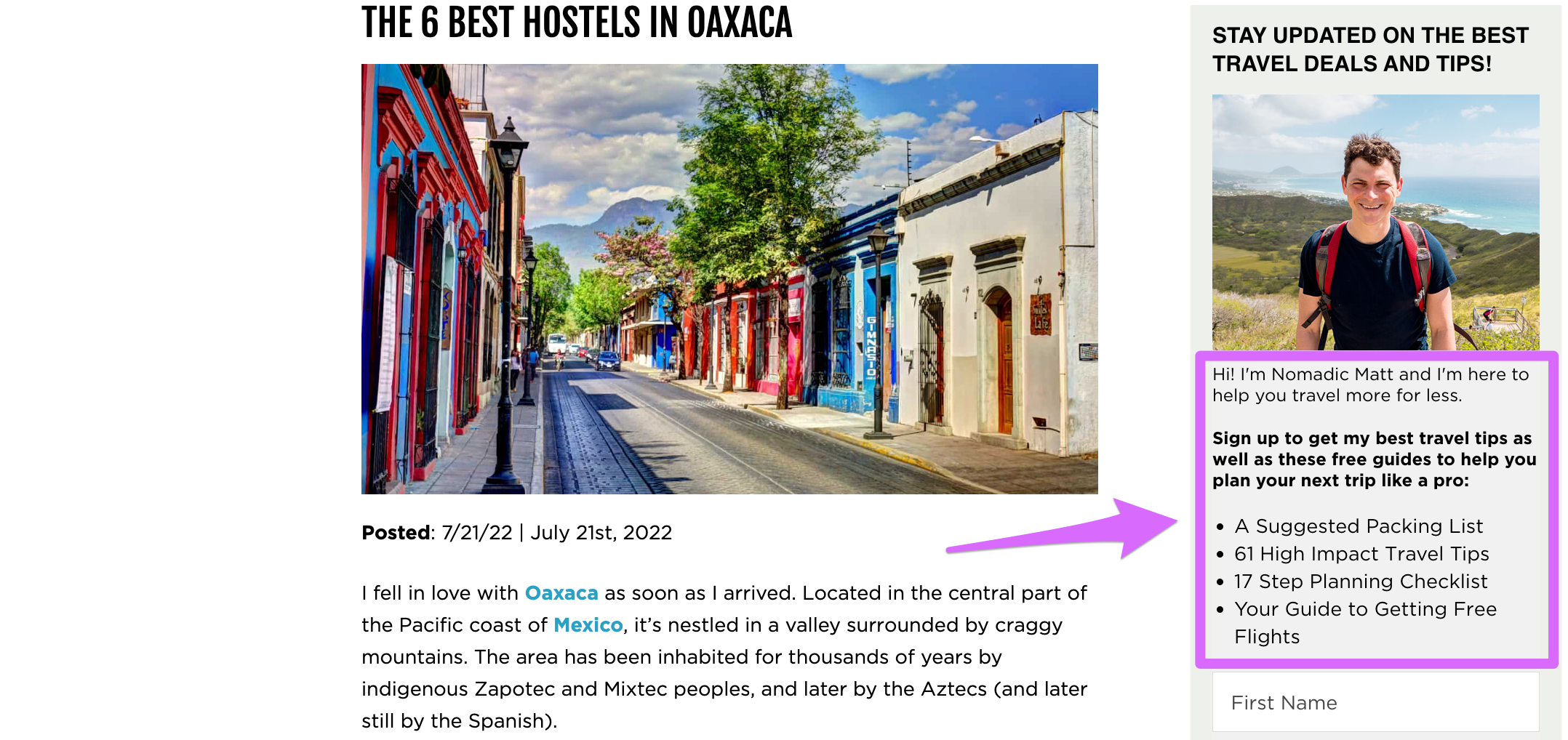
A sidebar is also a natural spot for a headshot if you want a face attached to the name. People trust people. A photo helps, especially on affiliate and review sites where recommendations carry weight.
Guest Posts
When you write a guest post for another site, the host will ask for a bio. Start with your core version, then add a link back to your site or the name of your primary project.
Guest posting is distribution. Your bio is the bridge that turns someone else’s audience into your traffic. Make the link obvious. Make the value proposition match what they just finished reading.
About Me Page
Your About page is where the rules change. You can go longer. You can list accomplishments, awards, and career history. You can share the personal story behind the brand.
A great About page helps readers connect with you as a person. That connection matters for lifestyle bloggers, coaches, and anyone selling trust alongside information.
If your site is professional rather than personal, you still have room here for schooling, experience, and proof of work. Just do not copy your resume verbatim. Tell the story of why you do this work and who you do it for.
The About page and the blog bio work together. The bio hooks. The About page closes the deal.
6Where Your Bio Fits in the Bigger System
Learning how to write a blog bio can feel like a small task. Five minutes and done, right? But for operators who treat publishing as a business, the bio sits upstream of everything else.
It shapes first impressions before your best content gets a chance. It sets reader expectations before they hit a monetized page. It gives brand partners a reason to reply to your pitch instead of archiving it.
We have seen this pattern across Lasso customers running sites at every scale. The publishers who treat trust as infrastructure, not accident, tend to compound faster. Clear positioning in the bio is one of the cheapest trust investments you can make.
Before you obsess over bio wording, make sure your niche and monetization model are solid. If you have not validated your angle yet, start with our guide on how to pick a blog niche. A perfect bio on the wrong topic still loses.
Once your bio is live and your content library is growing, the next bottleneck is usually monetization gaps, not traffic. Run an Opportunities Scan on the pages you have already published. Most operators find product mentions sitting without affiliate links in posts that already rank. Fixing those placements is often the fastest path to higher revenue without writing a single new article.
Write one true sentence about who you help. Build everything else from there.

Jamie I.F.
Jamie heads up marketing at Lasso, runs a portfolio of niche sites, and tweets a lot about affiliate marketing and SEO.